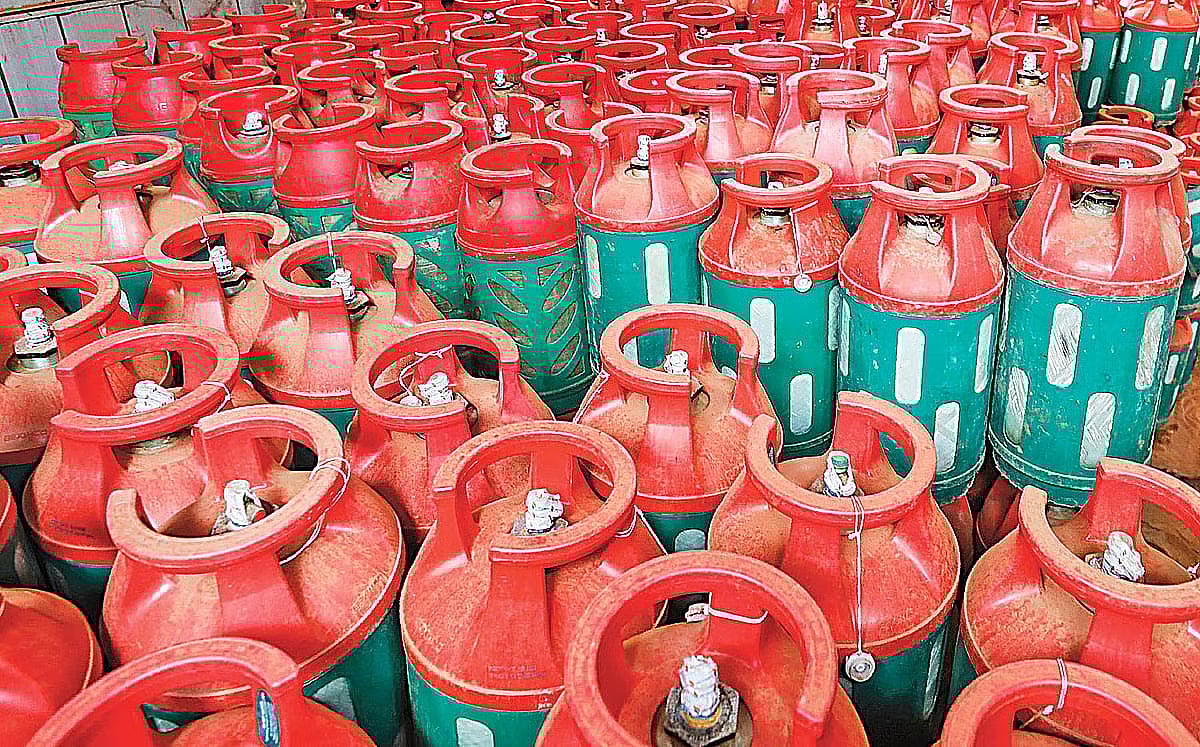
The government accounts for just 1.33 per cent of the country’s LPG (liquefied petroleum gas) market, while the private sector controls the rest.
To reduce dependence on private operators and create scope for government intervention during crises, Bangladesh Petroleum Corporation (BPC) took the initiative to directly import LPG for the first time in January.
However, despite seven months of efforts, the agency has failed to import even one tonne of LPG.
Over the past seven months, BPC has invited tenders five times. However, it failed to find any acceptable supplier in response to the tenders. It then took the initiative to purchase 5,000 tonnes of LPG through a direct procurement method outside the regular tendering process.
A company named Speed Marketing Corporation secured the contract to supply LPG worth around Tk 450 million (45 crore) through the direct procurement method.
The company deposited the required security deposit on Thursday. However, BPC is still uncertain about when it will be able to supply the gas.
Two responsible BPC officials told Prothom Alo that the corporation will now sign an agreement with the company after it has deposited the security money.
The company will then have to open a letter of credit (LC) for the import. As a result, it is not yet possible to say when the imported LPG will reach the country.
One of the conditions for BPC receiving approval to import LPG was that it would supply the imported LPG to approved private operators. The operators would then market the gas themselves.
Amirul Haque, president of the LPG Operators Association of Bangladesh (LOAB), told Prothom Alo, “Private operators are ready to cooperate. However, all rules and conditions, including the commercial terms, must be acceptable to both parties.”
On 20 January, the Energy and Mineral Resources Division approved BPC’s LPG import proposal subject to three conditions. BPC then sought suppliers on five occasions between February and July.
The process of importing LPG is underway. We are in discussions with two companies. Imports will begin soon. We are also trying to establish LPG plants in Chattogram and Mongla. If these plants can be built, they will create capacity in the LPG sector. Consumers will also benefit from this.Md Manzur Alam Pradhan, BPC Chairman
However, no company showed interest. Later, when Speed Marketing expressed interest in supplying LPG on its own on 4 August, BPC moved to purchase the gas through the direct procurement method.
Asked about the matter, BPC Chairman Md Manzur Alam Pradhan told Prothom Alo, “The process of importing LPG is underway. We are in discussions with two companies. Imports will begin soon.” He added, “We are also trying to establish LPG plants in Chattogram and Mongla. If these plants can be built, they will create capacity in the LPG sector. Consumers will also benefit from this.”
The government stopped approving new residential gas connections in 2015. Since then, the use of LPG as a cooking fuel has grown rapidly. According to the LPG Operators Association of Bangladesh (LOAB), the sector grew by 100 per cent in 2016 compared with the previous year.
In 2017, growth increased further to 123 per cent. The country supplied 550,000 tonnes of LPG in the 2017–18 financial year. The figure has now risen to around 1.5 to 1.6 million (15 to 16 lakh) tonnes a year.
Although the market has expanded significantly, almost the entire business remains under private-sector control.
According to BPC, the government does not import any LPG. Eastern Refinery, the state-owned oil refinery, obtains some LPG as a by-product during the oil-refining process.
In the private sector, 15 to 20 companies import a major share of the country’s LPG.
Around 80 per cent of the LPG used in the country goes towards household cooking. In 2020, a 12 kg cylinder cost around Tk 900. Since May 2021, the Bangladesh Energy Regulatory Commission (BERC) has been setting LPG prices.
In May that year, the price of a 12 kg cylinder stood at Tk 842. However, prices began to rise following the start of the Russia-Ukraine war in 2022, driven by developments in the international market.
During the severe shortage last December, a cylinder sold for as much as Tk 3,000 in some parts of the country.
As a nationwide shortage emerged, the government took steps in January to import LPG through BPC to reduce reliance on the private sector and increase market supplies during shortages.
For this purpose, BPC wrote to the Energy and Mineral Resources Division on 10 January, seeking policy approval. The division granted approval on 20 January, subject to three conditions.
After receiving approval, BPC invited tenders five times—twice in February and three times in July—but no company showed interest. BPC officials said the high premium was a major obstacle to attracting suppliers.
One company sought a premium of US$270 per tonne on top of Saudi Aramco’s contract price. BPC rejected the offer, considering the premium excessively high and commercially unviable.
After failing to secure a supplier through five attempts, Speed Marketing Corporation submitted a proposal to the Energy and Mineral Resources Division on 4 August, expressing interest in supplying LPG.
The company is not a listed supplier of BPC. BPC subsequently took steps to purchase 5,000 tonnes of LPG from the company through the direct procurement method.
Speed Marketing proposed supplying LPG at a premium of US$97 per tonne over Saudi Aramco’s August contract price. BPC’s evaluation committee recommended purchasing 5,000 tonnes of LPG at that rate.
The total cost would amount to US$3.65 million, or approximately Tk 452.4 million (45.24 crore).
The LPG market depends almost entirely on the private sector. Therefore, it is important to strengthen the government’s effective presence in the market. If BPC imports LPG, it will create an alternative source of supply and increase competition.Professor M Shamsul Alam, energy adviser to the Consumers Association of Bangladesh (CAB)
According to BPC documents, Speed Marketing had agreed to provide a performance security equivalent to 5 per cent of the total purchase price.
Separately, another company, Brothers LPG, has also agreed to supply LPG. BPC’s board has approved the supply, but the government has yet to give its approval.
Meanwhile, Professor M Shamsul Alam, energy adviser to the Consumers Association of Bangladesh (CAB), believes BPC should complete the LPG import process quickly.
He told Prothom Alo, “Importing LPG only once will not create an effective government presence in the market. BPC must therefore increase the capacity of its subsidiary, LP Gas Limited. It must arrange regular LPG imports through the company. At the same time, it must develop its own infrastructure for importing, storing and bottling LPG.”
Shamsul Alam further said, “The LPG market depends almost entirely on the private sector. Therefore, it is important to strengthen the government’s effective presence in the market. If BPC imports LPG, it will create an alternative source of supply and increase competition.”