Bangladesh Bank
Businessperson appointed as governor for the first time
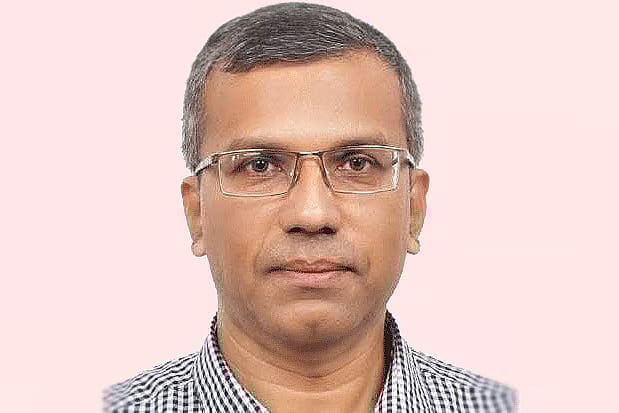
The government has cancelled the appointment of Ahsan H Mansur as the Bangladesh Bank governor and appointed Md Mostaqur Rahman in his place. Mostaqur Rahman holds an FCMA degree in cost management and is a businessman. This is the first time a businessperson has been appointed governor of the central bank of Bangladesh.
Mostaqur Rahman will be the 14th governor of Bangladesh Bank. A notification issued by the financial institutions division of the Ministry of Finance on Wednesday stated that, under the Bangladesh Bank Order, he has been appointed governor for four years from the date of joining, on the condition that he relinquishes all work relationships with other institutions and organisations. The order, issued in the public interest, takes effect immediately.
Earlier, another notification cancelled the remaining term of Ahsan H Mansur, whose contract was due to run until 13 August 2028. In the days prior to the new appointment, a group of Bangladesh Bank officials had been protesting against Mansur.
Before the cancellation, at a press conference on Wednesday, Mansur said, “It would take me only two seconds to resign.” Immediately after the press conference, news of the new governor’s appointment spread, and Mansur returned home.
Profile of the new governor
According to his resume obtained from the ministry of finance, Mostaqur Rahman was born in Dhaka in 1966. He earned a master’s degree in accounting from Dhaka University and later obtained his FCMA from the Institute of Cost and Management Accountants of Bangladesh (ICMAB).
Sources in the Bangladesh Nationalist Party (BNP) said he was the 23rd member of the 41-member central election steering committee of the party formed for the 13th national parliamentary election.
According to BGMEA (Bangladesh Garment Manufacturers and Exporters Association) sources, Mostaqur Rahman is the managing director of Hera Sweaters, an environment-friendly factory in Narayanganj. Bangladesh Bank sources said Hera Sweaters has an outstanding loan of Tk 860 million with Mutual Trust Bank. The loan had become non-performing but was rescheduled in June last year under a special facility.
The new governor faces multiple challenges. Being a businessman, he will encounter potential conflicts of interest and will have to take decisions against business interests. How impartially and firmly he executes these responsibilities remains to be seen. Recovering non-performing loans will be his ‘acid test.’Mustafa K Mujeri, Former chief economist of Bangladesh Bank
His resume also mentions business interests in the housing sector, alongside his work in export-oriented garments. It states that he has more than 30 years of experience in the financial sector, particularly in corporate finance, exports, institutional governance, and financial management.
Mostaqur Rahman is a member of BGMEA, Real Estate and Housing Association of Bangladesh (REHAB), the Association of Travel Agents of Bangladesh (ATAB), and the Dhaka Chamber of Commerce & Industry (DCCI). He has served on various committees of these organisations and also has experience with the Chittagong Stock Exchange Limited.
After the BNP government assumed office, changes have been taking place in several central positions. Responding to journalists at the secretariat on Wednesday, finance minister Amir Khosru Mahmud Chowdhury said changes are not limited to Bangladesh Bank but are happening in many places and will continue as necessary to implement the new government’s programmes, priorities, and plans.
Departure of Ahsan Mansur
Toward the end of the previous Awami League government, the economy deteriorated. Foreign exchange reserves fell, the price of the dollar rose sharply, and non-performing loans increased exorbitantly. At the same time, prices of electricity, fuel, gas, and other goods and services were raised, resulting in uncontrolled inflation.
Mansur had also initiated investigations into alleged irregularities involving the family of former prime minister Sheikh Hasina and 10 major business groups: S Alam Group, Beximco Group, Nabil Group, Summit Group, Orion Group, Gemcon Group, Nassa Group, Bashundhara Group, Sikder Group, and Aramit Group.
There were also incidents of bank looting, loan misappropriation, capital flight, and forced ownership transfers during the Awami League government. Following the mass uprising in July, the government fell on 5 August 2024. On 14 August of that year, economist Ahsan H Mansur was appointed governor of Bangladesh Bank.
Mansur had prior experience working at the International Monetary Fund (IMF) on economic recovery in various countries. He most recently served as executive director of the Policy Research Institute (PRI). After assuming office, he implemented a market-based exchange rate for the dollar while managing to stabilise it and was able to increase reserves even after stopping dollar sales.
Before the fall of the Awami League government on 5 August 2024, reserves stood at $25.92 billion (or $20.48 billion under IMF BPM-6 method). As of Tuesday, reserves had reached $35.04 billion ($30.30 billion under IMF method).
Reserves covering three months of imports are generally considered comfortable; Bangladesh currently has reserves covering five to six months of imports.
Mansur also revealed the true state of the banking sector by aligning the definition of non-performing loans with international standards. According to central bank data, 36 per cent of loans, amounting to about Tk 6.5 trillion, have become non-performing. Five Islamic banks unable to repay due to irregularities were merged into the Combined Islami Bank. Six financial institutions are set to be closed. Banks have signed agreements with foreign institutions to recover laundered funds.
Mansur had also initiated investigations into alleged irregularities involving the family of former prime minister Sheikh Hasina and 10 major business groups: S Alam Group, Beximco Group, Nabil Group, Summit Group, Orion Group, Gemcon Group, Nassa Group, Bashundhara Group, Sikder Group, and Aramit Group.
He had also sought amendments to the Bangladesh Bank Order to strengthen the bank’s independence. As part of the banking sector reform process, amendments to the Bank Companies Act and other laws are underway. The financial sector continues to face multiple challenges.
Challenges ahead
The BNP government, winning 209 seats in the 13th national parliamentary election, pledged in its manifesto to ensure good governance in the banking sector, maintain discipline, strengthen oversight and transparency, increase autonomy and authority of the central bank, intensify supervision, and enhance Bangladesh Bank’s authority while abolishing the banking division.
Analysts believe the new governor will face significant challenges in implementing these commitments and restoring discipline in the financial sector.
Mustafa K Mujeri, former director general of Bangladesh Institute of Development Studies (BIDS) and former chief economist of Bangladesh Bank, told Prothom Alo that the new governor faces multiple challenges. Being a businessman, he will encounter potential conflicts of interest and will have to take decisions against business interests. How impartially and firmly he executes these responsibilities remains to be seen.
Recovering non-performing loans, he said, will be his ‘acid test.’
According to Mustafa K Mujeri, restoring discipline in the financial sector is a prerequisite for meaningful national progress.