Nepalis assess damage after terror of deadly protests
Retired Nepali civil servant Dhruba Shrestha has lived through decades of turmoil, from civil war to political upheaval, but the 76-year-old says nothing compared to the violence that engulfed the Himalayan nation this week.
"I've seen violence since my student days, but never such a riot," Shrestha told AFP Friday, as the army briefly lifted a curfew in Kathmandu.
Nepal was plunged into chaos after police fired on young anti-corruption protesters, triggering nationwide unrest on Tuesday.
Demonstrators torched parliament, government and presidential offices, and a newly-opened Hilton Hotel, before soldiers retook control of the streets the following day.
"Anyone would be afraid in such a situation," Shrestha said. "No one could have imagined this."
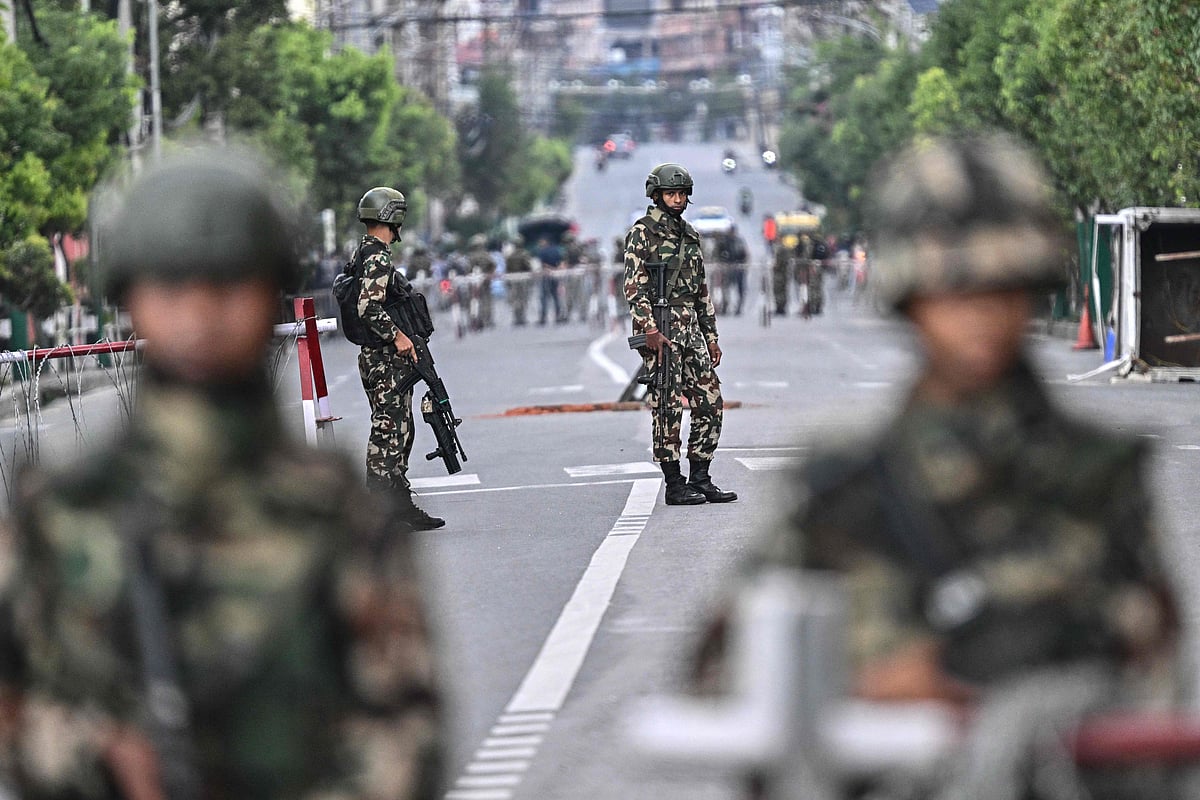
The capital's streets were eerily quiet on Friday, littered with charred vehicles, as soldiers manned checkpoints around scorched government buildings.
At least 51 people were killed across the country of 30 million, the worst violence since the end of a civil war and the abolition of the monarchy in 2008.
Security forces are also scrambling to recapture some 12,500 inmates who escaped in mass jailbreaks.
Nepal's president and army chief are seeking a consensus interim leader to fill a political vacuum.
Disagreements between rival factions remain, although Sushila Karki, 73, Nepal's first woman chief justice, is a leading candidate.
'Scary and troubling'
For ordinary citizens, daily survival is the focus.
Hundreds of residents emerged from hiding at home to buy food, bracing for potentially more days indoors.
"The situation is obviously scary and troubling," Shrestha said while stocking up at a market.
Economic hardship added fuel to the protests, alongside demands for political change.
The World Bank says a "staggering" 82 per cent of Nepal's workforce is in informal employment -- among the highest rates in the world.
"It's difficult for people like us, who have to earn and spend every day," said construction worker Anup Thapa, sipping tea at a street stall.
"I don't have savings. It's tough to survive without work."
Others came out to witness the destruction, including 73-year-old Achyut Thapaliya, who wept after visiting the fire-ravaged Singha Durbar government complex and the parliament.
"I returned with tears in my eyes. It was our pride," he said.
Thapaliya backs the protesters' demand to end corruption, but recoiled at the violence.
"This is the land of the Buddha," he said. "We are a peace-loving people, and it should stay like that."