Prothom Alo’s public opinion survey on the state, government, and the country’s political–economic situation has returned. The last such Prothom Alo survey was conducted in 2013. In the twelve years since then, a lot has changed in the meantime.
The country’s condition during that period was made starkly visible in last year’s July mass uprising. We will return shortly to the reasons behind this long gap in public opinion surveys.
People are the ultimate destination of journalism. For that reason, from its founding, Prothom Alo placed significant importance on understanding public opinion and presenting people’s views to readers. Prothom Alo was first published in November 1998.
The very next year, in 1999, we began conducting regular reader surveys. These surveys focused on topics such as contemporary politics or living conditions and were open to reader participation. Readers responded enthusiastically.
Although these surveys did not follow a formal methodology, research protocol, or involve an external expert organisation, they nonetheless reflected general public sentiment about surrounding realities. With some interruptions, these reader-based surveys continued until 2007.
From 2008, Prothom Alo decided to conduct more systematic surveys with wider public participation, following proper methods and involving experienced survey organisations. The aim was to present a comprehensive picture of how people were doing, what they thought about the political and economic situation, and what they expected from the government.
Thus began the journey. From that point, annual surveys continued regularly until 2013, without interruption. They were conducted by the professional polling agency ORG Quest.
Then came the long pause. Readers can surely guess the political reasons behind it. But before entering that discussion, let us revisit some findings of those earlier surveys.
To understand how public attitudes shift on major issues, some questions were kept constant each year. One such question asked respondents which political party they would vote for if an election were held immediately—listing the Awami League, BNP, Jatiya Party (Ershad), and others.
The surveys show that public support for the Awami League in 2009, 2010, 2011, and 2012 stood at 56 per cent, 46 per cent, 38 per cent, and 35 per cent respectively—clearly a steady decline.
In contrast, BNP’s support rose steadily over the same years: 25 per cent, 39 per cent, 43 per cent, and 44 per cent. In the later years, BNP’s popularity even surpassed that of the Awami League.
Based on the latest survey conducted in November the year before, Prothom Alo published a major report on 6 January 2013 titled: “Government’s Popularity Has Declined.” Needless to say, the Awami League, led by Sheikh Hasina, was in power at that time.
Writing about that survey, I noted, “In several indicators, the government’s performance deteriorated continuously over its four years in power. This was especially true of state institutions. People believed that bodies such as the judiciary and the Anti-Corruption Commission had not improved after the government took office.
A growing number felt the country was moving in the wrong direction. They also felt corruption had increased further. The public perceived the Awami League and its various wings as becoming more reckless each year, and uncontrollable. The government failed to earn people’s support on issues such as the Padma Bridge and Muhammad Yunus.”
But the situation grew even more distressing. The restoration of democracy achieved through the 1990 mass movement was overturned by the 5 January, 2014 election. Sheikh Hasina held an election that became deeply controversial.
The BNP boycotted it. Elections in 153 constituencies took place without any contest, most of which went directly to the Awami League. On that day, democracy in Bangladesh suffered a severe setbacks under Sheikh Hasina’s rule.
What followed was the steady centralisation of power in Sheikh Hasina’s own hands. The first target on that path was freedom of expression. Through both legal and extralegal means, independent and dissenting voices were brutally suppressed. Enforced disappearances and extrajudicial killings created an atmosphere of terror across the country.
Independent media were harassed in numerous ways and kept under severe pressure. Bangladesh became a state of fear. No organisation dared to conduct political surveys anymore. In such an authoritarian environment, conducting political polling became extremely difficult.
Nevertheless, Prothom Alo continued surveys on other topics. Particularly notable is the youth survey, launched in 2017 to understand the problems, crises, expectations, and trends among young people. The survey was interrupted in 2020 due to the Covid-19 pandemic.
These youth surveys consistently reflected deep frustration among young men and women regarding income, employment insecurity, and the country’s overall reality. The government paid little attention to these issues. The explosion of that pent-up frustration became visible last year.
After the 2024 student-public uprising, a new situation has emerged. The country stands at a new crossroads. The interim government formed through the uprising has been running the state for nearly a year and a half. A new elected government is expected to take office after the upcoming election.
Citizens are eagerly waiting for Bangladesh’s democratic transition. This is perhaps the ideal moment to understand people’s political and economic assessments and expectations. Our latest public opinion survey was conducted by the professional agency Key Makers.
The themes of this Prothom Alo survey are: assessment of the interim government’s performance, current living conditions, the upcoming election, and the public’s expectations from the next elected government.
The saying once attributed to former British Prime Minister Benjamin Disraeli has now become proverbial: “There are three kinds of lies—lies, damned lies, and statistics.” It is true that only a referendum can reveal the absolute truth on any issue, but conducting referendums on everything is impossible—too costly and time-consuming. For that reason, the world relies on statistics.
Statistics give hints of truth. A well-conducted survey gives a strong indication of truth. As Nobel laureate Irish writer George Bernard Shaw said: “To be distraught by statistics is the mark of a truly intelligent person.”
We hope that our current and incoming governments will show that mark—by responding thoughtfully to the opinions of the people.
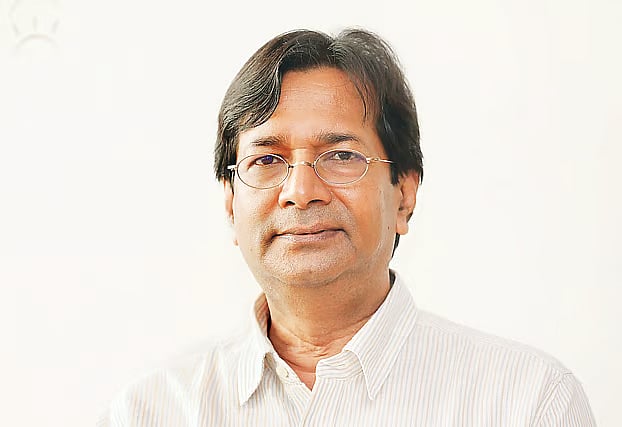
*Sajjad Sharif, Executive Editor, Prothom Alo