David Bergman's column
Tawfiq-e-Elahi's detention raises questions about ICT's detention rules
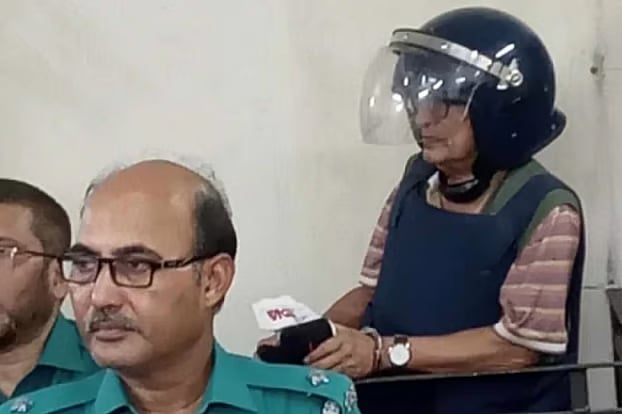
On 17 October 2024, the chief prosecutor of the International Crimes Tribunal Tajul Islam applied to the court for a warrant to arrest Dr Tawfiq-e-Elahi Chowdhury, the Power, Energy and Mineral Resources Adviser to the former prime minister Sheikh Hasina, for the offence of Crimes against Humanity. He was not the only person named in the application. The names of 44 other people, all Awami League politicians, or otherwise people close to the former governing party, were included.
Chowdhury, then 79 years of age, had been the energy adviser to Shiekh Hasina for 15 years between 2009 and 2024. His experience for that role came from his time as Secretary at the Ministry of Power and Energy between 1997 to 2000, during the Awami League’s first term in office. A garlanded freedom fighter during the 1971 war, Chowdhury was known to be close to Sheikh Hasina but was never an official member of the Awami League. During his period of time as the Prime Minister’s Adviser, energy specialists confirm that he focused his attention on power and energy, and kept away from general politics.
Neither then, nor at any time in the ten months since, has the police presented any evidence – photographs, videos, bank account statement, mobile phone messages etc - to substantiate Chowdhury’s involvement in the murder.
In its order granting the arrest warrants, the ICT accepted the Chief Prosecutor’s assertions to the court that “the investigating officer has... found prime-facie incriminating material against [Chowdhury] constituting crimes against humanity” and that if left un-detained, he could interfere with the investigation process by destroying evidence or threatening witnesses.
At the time the Tribunal warrant was issued, Chowdhury was however already in prison.
Five weeks earlier, on 10 September, plainclothes police had come to his house in Banani and taken him to the Detective Branch office of the police. At the magistrate’s court the following morning, Chowdhury was told that he had been arrested in relation to the killing on 19 July of Sumon Sikder in North Badda during the protests. Chowdhury’s name was not included amongst the 179 names of those originally accused of murder, but police claimed in court that Chowdhury was one of the “250” unnamed people which were also alleged to have been involved. The magistrate remanded him into police custody for four days of questioning, after which he was sent to prison.
Neither then, nor at any time in the ten months since, has the police presented any evidence – photographs, videos, bank account statement, mobile phone messages etc - to substantiate Chowdhury’s involvement in the murder. Indeed, according to his family, during his time in police remand, the police have never asked him any question about the killing.
Since Chowdhury was already in prison in relation to the Badda case, the ICT warrant meant that a week later, on 27 October, Chowdhury (along with 13 other accused) were produced before the Tribunal and “shown arrested” in what became named as ICT BD Misc. Case No 03 of 2024.
At that time, Chowdhury still had no information on the prosecutor’s grounds for his arrest. The ICT rules, however, require that a “copy of allegations” should be provided to an accused either at the time of arrest “or later” – and sometime in late November, Chowdhury’s defence lawyers received a copy.
The document, dated 9 November, titled “Initial Complaint”, states that Chowdhury is an “important accused” and sets out four complaints against him. Most of what is written are general assertions of his involvement in crimes, but the ICT investigators do make two specific factual claims.
The first claims that the former energy adviser “referred to the protesting students and people as the 'ghosts of anti-liberation forces.'”
The second is that Chowdhury “and leaders of the 14-party alliance” together held a meeting where it was decided both to impose a nationwide curfew and “to open fire on students and the public during the curfew.”
It is a matter of public record that Chowdhury was not at any 14 party alliance meeting during July or August 2024, and so could never have been involved in their decision-making. In addition, there is nothing in the public record to suggest Chowdhury referred to students or others as “ghosts of anti-liberation forces”, a phrase used by others at public meetings.
These are two serious factual errors on the face of the allegations, that raise questions both about his initial arrest – as well as his continuing detention.
Notably, the ICT allegations contain no mention of the killing of Sumon Sikdar on 19 July 2024, for which Chowdhury was initially arrested, raising yet more questions about his detention for the murder case.
In response to the defects of the “allegations” against Chowdhury, Tajul Islam, the ICT Chief Prosecutor said, “The matter remains under investigation and once completed a decision will be taken as to whether there is a sufficient evidential basis to charge him. Until the investigation is completed it would not be appropriate to comment further.”
In May, seven months after his detention, Chowdhury applied for bail at the ICT. Under the current rules of the Tribunal - unlike other international tribunals dealing with similar offences – there is no evidential threshold in the law that has to be proven to justify arrest or continuing detention. A person can be detained simply because it “is necessary for effective and proper investigation.”
In the bail application the issue of “evidence” was not raised, with the lawyers focusing on Chowdhury’s age and health. In its response, the chief prosecutor told the court, “there are no tangible grounds for granting bail of the accused-petitioner at this stage” and that “before conclusion of investigation it would not be just and proper to enlarge the accused petitioner on bail.”
The judges agreed with him. “Under the attending facts and circumstances, we find no cogent reason for setting the accused-petitioner free on bail at this state and thus the bail application is rejected,” the order stated.
In the Tribunal’s order, there was no mention of the progress of the investigation or the extent of any evidence against Chowdhury. Since October 2024, when he was arrested for this offence, no ICT investigator or prosecutor has questioned him.
At present the ICT is detaining 100 people, a combination of politicians from the Awami League and its allied parties, law enforcement officers, and a former judge.
Toby Cadman, an international criminal lawyer based at G37 Chambers in London who is acting as special adviser to the ICT Chief Prosecutor said that it would not be appropriate for him “to comment publicly on individual cases or matters that may come before the Tribunal” and said that “Any alleged factual inaccuracies within the allegations are a matter for evidential challenge within the judicial process, not for external commentary.”
Cadman did not comment on the adequacy of the ICT rules relating to detention, and asserted that it was a decision for the judges to determine whether a person should be detained or not. “Speaking in general terms, the Tribunal’s framework provides that detention may be ordered where there is a prima facie basis for investigation and where the Tribunal considers detention necessary in the interests of justice ….. The judges must be satisfied that the statutory threshold has been met before any order for detention is made.”
The continuing detention of Chowdhury is concerning. It seems to be permitted by a legal provision in the ICT rules which allows arbitrary detentions – that is to say detentions without evidence - as well as by prosecutors and judges who are content for someone to remain detained for months at a time simply because they were a senior adviser in the Awami League government, without concern for the presence of evidence of involvement in the crimes they are arrested for.
The government should change the ICT rule allowing detention without evidence, and in the meantime, ICT prosecutors and Tribunal should re-assess the evidence they have against each person currently detained under the ICT and immediately release all those against whom they have no credible evidence for involvement in Crimes against Humanity.
The credibility of the country’s International Crimes Tribunal requires this.
* David Bergman is a journalist
The views expressed here are the writer's own.