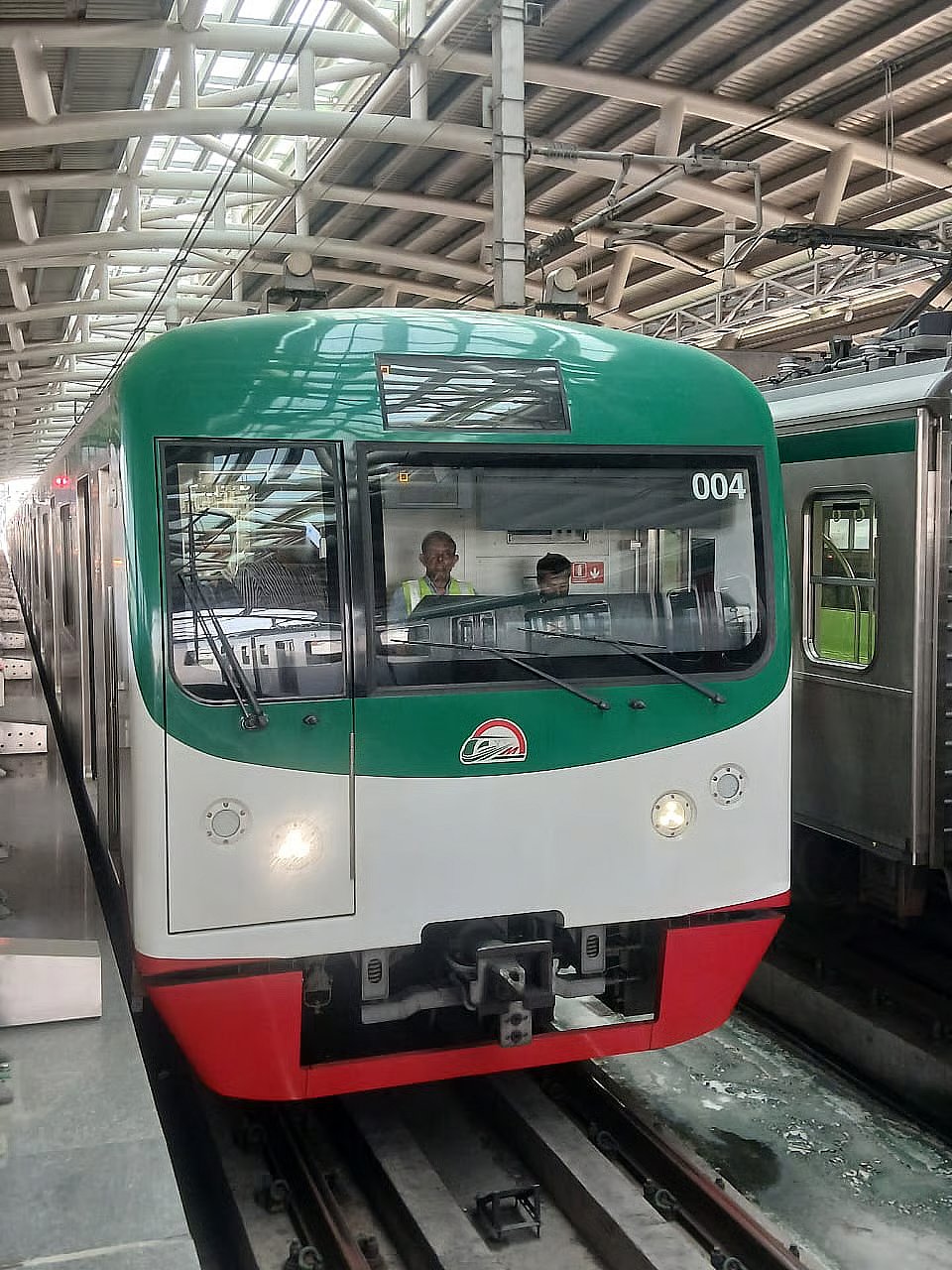
Public transport
Metro rail: Permanent cards can be recharged from home
Permanent metro cards can be recharged through all sorts of online banking services including bKash, Nagad and Rocket.
There are also plans to collect the fare of single trips through mobile banking.
Metro rail passengers no longer need to go to the stations to recharge their permanent cards as it can be done from the home using any of the available mobile banking services including bKash, Nagad and Rocket.
The service is going to be launched from next month.
People are now paying different bills including the electricity, mobile and internet bills using various mobile financing services such as bKash, Nagad and Rocket.
The metro rail passengers have been demanding this right from the beginning. Now the authorities have taken initiatives to introduce the system in metro rail services.
At present, two types of permanent cards are used in the metro rail system—Rapid and MRT Pass. Under the new arrangement, both cards can be recharged as desired through online banking.
However, after recharging, passengers will need to update their permanent cards at least once by touching them to a special device installed at the station.
Once the card is updated after an online recharge, it will remain valid until the balance runs out. The process will need to be repeated each time a recharge is made.
The Dhaka Mass Transit Company Limited (DMTCL) is responsible for the construction and operation of the metro rail in Dhaka. Its own permanent card is called the MRT pass.
On the other hand, the permanent card supplied by the Dhaka Transport Coordination Authority (DTCA) is known as the rapid pass, which is intended for use not only on the metro rail but also on buses, trains, and other public transport.
The clearing house that manages transactions for permanent cards operates under the DTCA. The authority has assigned a private company named DataSoft to handle the online recharge system for both rapid and MRT pass cards.
According to DTCA sources, machines for updating the recharged balance by tapping the cards at stations have already started being installed. There will also be an app available on the DTCA website through which users will be able to recharge their cards.
DTCA executive director Neelima Akhter expressed hope to launch the service by the next month saying the machines being installed at the stations are currently undergoing quality and performance tests.
Once all the preparatory work is complete, an announcement will be made on when card recharging from home will begin. After that, the app will be added to the DTCA website.
Why the new machines are needed
According to DMTC sources, all recharged funds and customer information are currently stored within the MRT and Rapid Pass cards. The machines at each metro station gate can read this data. However, if the card is recharged through online banking, the information remains in the software and will not appear when the card is tapped at a regular gate. That is why a separate device is being installed, which the card must be tapped on to update the recharged balance. After that, the card can be used normally at metro gates until the balance runs out.
Arafat Rahman, a regular commuter of metro rail, considers this as a great initiative. He said, “Sometimes we have to wait in a long queue for hours to recharge the permanent cards. Besides, we needed to use cash for card recharge. The new system will reduce these hassles.”
He believes that the easier it becomes to recharge and purchase all types of cards—both permanent and single-ride—the less inconvenience passengers will face.
Passengers using MRT or Rapid Pass enjoy a 10 per cent discount. Currently, 55 per cent of metro riders travel with Rapid or MRT cards, while the remaining 45 per cent use single-ride cards. At present, both types of cards are in short supply.
The metro rail services are being extended gradually. As part of this, initiatives have been taken to launch several alternative options for ticket purchase and recharging cards. It will ease the entire process of using metro rail services and will boost the number of passengers and income.Faruque Ahmed, MD, DMTCL
A week ago, metro service hours were extended. Following the half-hour adjustment, the first train now departs from Uttara North Station at 6:30 am, with the last train leaving at 9:30 pm. From Motijheel, the first train departs at 7:15 am, and the last at 10:10 pm. By mid-next month, the interval between consecutive trains will be reduced by two minutes, and authorities expect daily ridership on the metro to exceed 500,000.
The option of debit and credit card
The metro rail authorities have taken a few more initiatives to ease the process of paying the fairs for the passengers. The process to introduce payment using debit and credit cards is underway.
In addition, authorities are considering allowing fare payment for single journeys via mobile banking. This system will be called the Universal Ticketing System (UTS). Officials say DMTC has issued an open tender to implement the plan. The existing Rapid and MRT passes, as well as single-journey cards, will continue to remain valid.
According to a source, DMTCL will not invest in implementing the system. The contractor will handle the installation of equipment, software deployment, and the necessary arrangements for transactions. A portion of the revenue from ticket sales will be paid to the contractor, though the exact amount has not yet been determined. It will depend on the bids received from the contractors.
DMTCL sources say that the current fare collection system in the metro operates as a ‘closed loop’. It only reads cards issued by Japan’s Sony Corporation, meaning debit or credit cards and other methods cannot be used. Under the new system, metro stations will need to install new machines that will allow fares to be paid by punching debit or credit cards.
Currently, single-journey cards must be purchased at the station counter and punched to board the train. At the end of the journey, the card is submitted again when exiting the station. Once the new system is implemented, passengers will be able to buy single-journey cards via mobile banking. Just like purchasing various products through apps of financial service providers such as bKash and Rocket, tickets can be bought similarly. After paying for travel over a specific distance, the passenger will receive a QR code on their mobile phone, which must be scanned at the station when entering and exiting.
DMTCL managing director (MD) Faruque Ahmed told Prothom Alo that metro services are being expanded day by day. To support this, several alternatives for ticket purchase and fare recharge are being introduced. This will make riding the metro easier for passengers while also increasing both ridership and revenue.