July Charter to take more time to get finalised
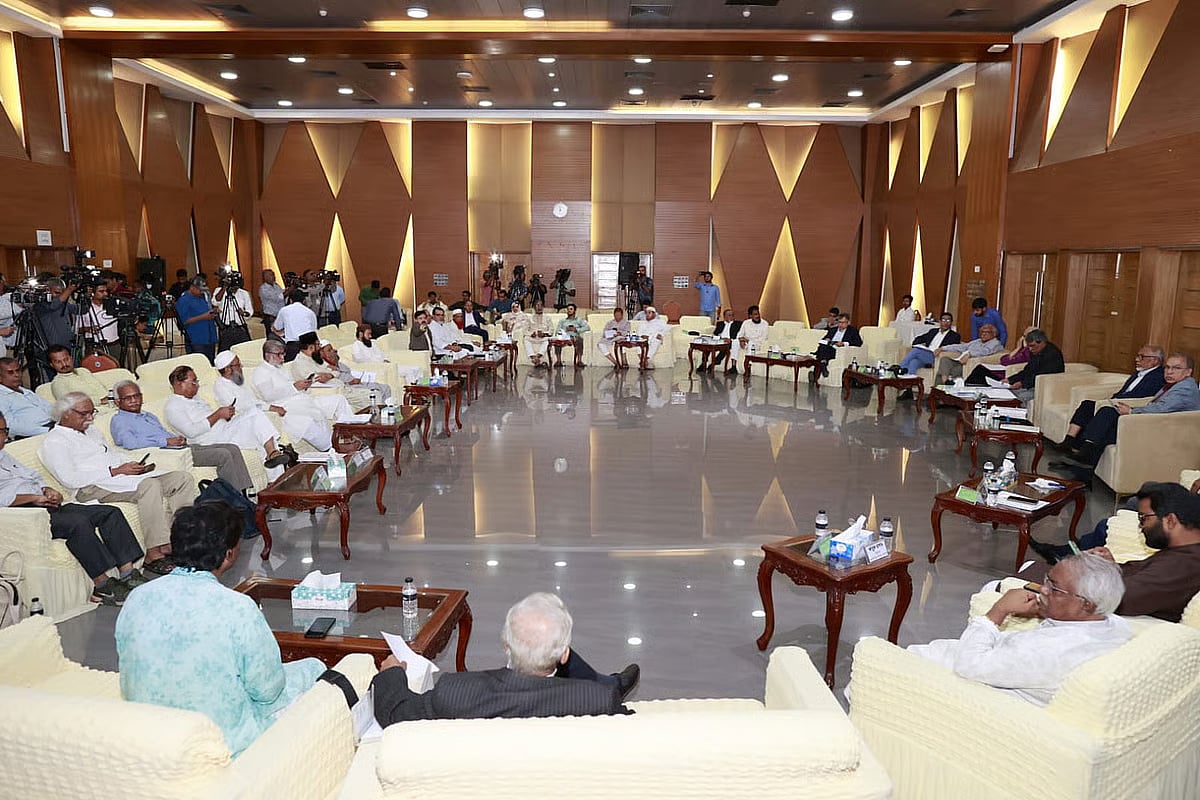
The July National Charter remains stalled due to differences among political parties over the commitment and the method of implementation of the reform proposals. The National Consensus Commission plans to begin formal discussions with the parties on these two issues next week.
This will be the third round of talks between the Commission and the political parties, through which the Charter may take its final shape. However, it will still take more time before it is finalised.
After assuming office, the interim government undertook various reform initiatives. In the first phase, the Consensus Commission held discussions with political parties on the reform proposals put forward by six commissions formed on constitutional reform, the electoral system, public administration, the Anti-Corruption Commission, the police, and the judiciary.
From February to July, two rounds of talks produced consensus and decisions on 84 reform proposals. These form the basis of the July National Charter now being prepared.
The initial target was to sign the Charter on 16 July. However, as discussions with political parties were not completed, that goal could not be achieved. The National Consensus Commission now aims to finalise the Charter by 15 September.
While there is agreement on which areas require reform, divisions remain among political parties over the method of implementation and the question of granting the July Charter legal authority.
The BNP’s position is that proposals related to laws can be implemented through ordinances issued by the interim government, while constitutional reforms must be implemented in the next National Parliament.
The initial target was to sign the Charter on 16 July. However, as discussions with political parties were not completed, that goal could not be achieved. The National Consensus Commission now aims to finalise the Charter by 15 September.
Jamaat-e-Islami insists that the reforms be implemented through a referendum or a presidential proclamation. The National Citizen Party (NCP), on the other hand, proposes the formation of a Constituent Assembly to implement the reforms, and favours holding Constituent Assembly and parliamentary elections simultaneously.
In addition, within the 84 proposals forming the July Charter, there are some areas of disagreement from BNP and a few other parties. For instance, BNP has submitted notes of dissent on certain key decisions, such as the provision for holding multiple offices by the Prime Minister, the electoral system for the Upper House, and the method of appointing officials to constitutional bodies. The question of how to implement these provisions also remains unresolved.
Meanwhile, the Consensus Commission has held several formal and informal meetings with experts on possible methods of implementation. So far, several options have emerged in discussions: holding a referendum on reforms on the same day as the parliamentary elections, introducing a legal framework, or using a presidential proclamation. More consultations with experts are expected, and their views will be presented in the meetings with political parties.
On the other hand, political parties are also divided over the pledge section of the draft July National Charter prepared by the Consensus Commission. BNP considers the proposal to place the Charter above the Constitution and to prohibit any legal challenge against it in court as unjustified. Jamaat-e-Islami, however, believes such provisions are necessary. The parties have already submitted their written opinions to the Commission.
According to Commission sources, the Consensus Commission is currently reviewing the parties’ opinions on the consolidated draft of the Charter. A Commission meeting on the issue is scheduled for today, Wednesday.
In the third round of talks with the parties, discussions will focus on the Charter’s commitment, its legal foundation, and the method of implementation. The Commission does not wish to prolong the third round of discussions. Informal dialogues with the parties are already under way.
Professor Ali Riaz, Vice-Chairman of the National Consensus Commission, told Prothom Alo that they expect to begin formal talks with political parties next week.
“The Commission is reviewing the parties’ opinions on the consolidated draft of the Charter,” he said.
“Taking into account both the parties’ opinions and the expert views received on the method of implementation, we will initiate discussions with the parties. The Commission’s goal is to finalise the Charter by 15 September,” Ali Riaz added.