UP Election
EC dialogue begins, 11-party alliance divided over coalition stance
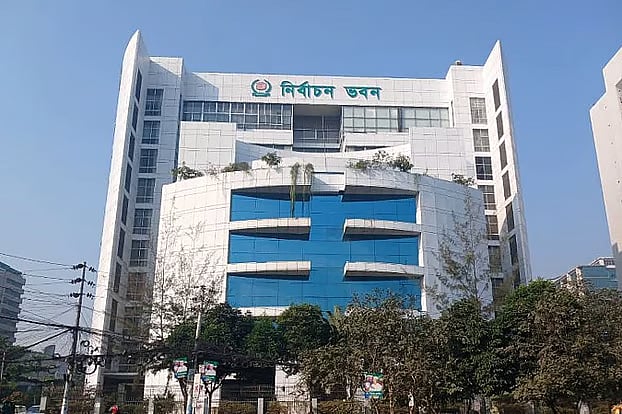
Ahead of the Union Parishad (UP) elections, the Election Commission (EC) is starting a dialogue with political parties from today, Sunday. However, the Jamaat-e-Islami-led 11-party alliance is divided over whether to participate in this dialogue as a coalition.
The EC invited 18 registered political parties, including ruling Bangladesh Nationalist Party (BNP) and opposition Jamaat-e-Islami, to the first day of talks on Sunday (29 November), according to their registration serial order.
However, Jamaat-e-Islami will not participate on Sunday. They want to take part in the dialogue as an alliance at a later time.
Meanwhile, alliance partners National Citizen Party (NCP) and Amar Bangladesh Party (AB Party) favour attending the EC's dialogue separately.
BNP, on the other hand, has informed EC that it wants to participate in the dialogue tomorrow, on Monday instead of today. Accordingly, the party will join the talks tomorrow.
The EC has invited 55 registered political parties to the dialogue over three consecutive days. The parties have been invited according to their registration order. On the first day of talks on Sunday, first 18 parties on the registration list, followed by the next 19 parties on Monday and another 18 parties on the following Tuesday have been invited for the dialogue.
Three parties belonging to the 11-party alliance, including Jamaat-e-Islami, are among those invited on the first day. EC sources said Jamaat informed EC Secretary Akhtar Ahmed over the phone last Thursday that the parties in the 11-party alliance want to participate in the dialogue together.
At that time, the EC advised them to submit an official letter in this regard. However, until Saturday evening, the EC had received no such letter.
Hamidur Rahman Azad, assistant secretary general of Jamaat-e-Islami, told Prothom Alo on Saturday night that a separate time has been requested for the 11-party alliance. Once the schedule is fixed, they will go to the EC together.
Among the other parties in the 11-party alliance, three have been invited to participate in the dialogue on Monday according to their registration serial. 5 parties, including NCP, have been invited to participate on the following Tuesday.
Relevant sources said that most of the parties in the 11-party alliance, including Jamaat, want the dialogue with EC to be held as a coalition. NCP, however, wants to attend the talks on its own.
NCP's decision to participate separately in the EC consultations, following its separate meeting with the prime minister, has sparked discussion in political circles.
Amid the situation, on Friday afternoon, a meeting of the liaison committee of the 11-party alliance was held at the central office of Jamaat in Moghbazar, Dhaka. Whether the 11-party constituents would go to the dialogue with the EC as a coalition or separately was the main agenda of discussion. In the meeting, parties other than the NCP and AB Party favoured going to the EC's dialogue as a coalition.
Ariful Islam Adeeb, one of the members of the NCP's political council who attended the meeting as the party's representative, told Prothom Alo, "The Election Commission invited the parties separately. However, most parties in the 11-party alliance are in favor of going to the dialogue as a coalition."
"Jamaat and other parties have already verbally called upon the Election Commission to hold the dialogue as a coalition. But no response has been received yet as it is the weekly holiday. On behalf of NCP, I have said that the party's stance on this will be conveyed after discussing with the top leadership of the party," he added.
AB Party Chairman Mojibur Rahman Monju told Prothom Alo on Saturday that since the parties in the 11-party alliance will participate in the local government elections independently, AB Party had decided to attend the EC meeting separately, in accordance with the commission's schedule. He said the party does not agree with the decision of not attending the dialogue if the 11 parties are not called together.
The EC usually holds dialogue with registered political parties ahead of national parliamentary elections, where parties present various proposals, recommendations and demands concerning elections and related laws and regulations.
The upcoming local government elections will be non-partisan. However, the EC stated that this dialogue has been organised to seek cooperation from political parties to hold a fair election. However, not all registered parties have been invited.
There are currently 59 registered political parties with the EC, while the registration of Awami League (activities banned in the country) remains suspended. The party has therefore not been invited. In addition, the EC has not invited Workers Party, Jatiya Samajtantrik Dal, Tariqat Federation and Samyabadi Dal, which are among the parties affiliated with the Awami League-led 14-party alliance.
The upcoming UP elections will be held in five phases. The first phase of voting will take place on 21 January, the second on 4 February, the third on 29 April, the fourth on 13 May and the fifth on 27 May.
EC Secretary Akhtar Ahmed told Prothom Alo on Saturday evening that the dialogue with BNP has been postponed by a day. He said Jamaat had verbally informed the commission that the 11-party alliance wanted to attend the talks together but no formal letter had been received by Saturday evening. Whether Jamaat-e-Islami will participate in the dialogue on Sunday is a matter of the party's decision, he said.
The EC secretary said the commission wanted to organise a fair and good election, like the 13th parliamentary election, with everyone's cooperation. The dialogue has been primarily organised to seek cooperation from all concerned in holding a fair election.