Analysis
Differences over fundamental reforms prevailed from the outset
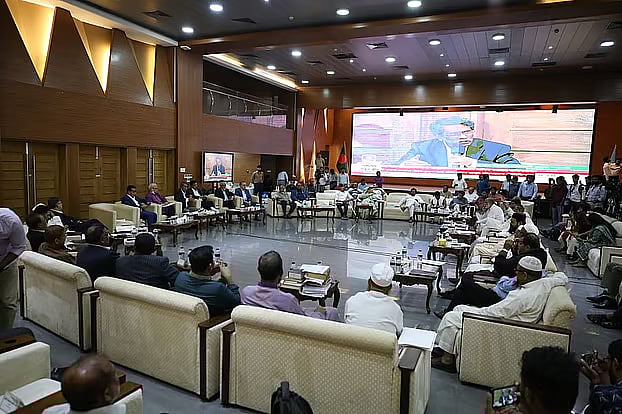
The day of the closed-door meeting at the LD Hall of the National Parliament still lingers in memory. Conversations with a few participants during the break made it clear that the discussions were not moving along an easy path.
On 17 April 2025, the day of the first meeting between the National Consensus Commission and BNP, a source indicated during the lunch break that the talks were not particularly constructive.
BNP was holding firm positions on fundamental questions related to reform. Even in the individual remarks of some members of the Consensus Commission after the meeting, there was a sense of disappointment.
It became evident that the word “reform,” which had emerged as the language of national aspiration after the mass uprising, was gradually turning into a political contest. At its core, the contest was about the balance of power within the state.
How much authority the prime minister would retain, how independent the president would be, who would control appointments to constitutional bodies, whether parliament would remain merely a rubber stamp or evolve into a genuine forum of accountability, and how difficult constitutional amendments would be in the future—these were the questions that shaped the tensions. Ultimately, these tensions determined the trajectory of the reform discussions.
Following the fall of the Awami League government in the mass uprising of 5 August, 2024, one of the most widely discussed issues was the reform of the state structure. It was not just about a change in government, but also about what kind of state system would emerge from this transformation.
Within two months of assuming office, in the first week of October 2024, the interim government formed six key reform commissions to bring qualitative changes across different sectors of the state. These included commissions on the Constitution, the electoral system, the judiciary, public administration, the police, and the Anti-Corruption Commission.
Later, based on the recommendations of these commissions, the National Consensus Commission was formed to build political agreement. After eight months of deliberations, the commission produced the “July National Charter.”
Some of the key recommendations of the reform commissions sparked debate in political circles. Questions were raised about whether the government would be able to function effectively if the powers of the executive branch were excessively curtailed.
From the outset, I covered the work of the Constitution Reform Commission and the Electoral System Reform Commission, and later the discussions of the National Consensus Commission. Looking back now, the entire process appears both promising and complex. At its core, it was a prolonged negotiation over how to rebalance the structure of state power.
Acknowledgment of structural problems
In the first phase, the six commissions formed by the interim government prepared a series of important recommendations aimed at bringing reforms in their respective sectors. These proposals were developed through consultations with experts, professionals, stakeholders, and people from various walks of life.
In many cases, written opinions were also collected from political parties. The Constitution Reform Commission and the Electoral System Reform Commission even conducted large-scale national opinion surveys through the Bangladesh Bureau of Statistics (BBS). On 31 January 2025, the commissions submitted their reports to the government.
Among these, the proposals for rebalancing state power were primarily outlined in the report of the Constitution Reform Commission. The report stated: “The absence of effective checks and balances poses a serious threat to Bangladesh’s democratic governance. The extensive consolidation of power has turned the prime minister into an authoritarian figure. One of the key objectives of constitution reform is to prevent the future emergence of any form of fascist rule and to ensure decentralisation and adequate empowerment of state institutions.”
To achieve these goals, the commission proposed reducing the prime minister’s monopolised authority and establishing a balance of power among different institutions. This included recommendations to reform the appointment process in constitutional bodies, grant the president independent authority in certain appointments, introduce a bicameral parliament, and impose provisions to prevent any individual from serving as prime minister for an extended period or holding multiple positions simultaneously.
The central aim of these proposals was to make constitutional reforms sustainable. To this end, the commission also proposed making the process of amending the Constitution more stringent, so that no party could alter it at will with a simple majority after coming to power.
According to discussions with commission members, proposals such as forming the upper house of parliament through a proportional representation (PR) system and requiring constitutional amendment bills to be approved by the upper house were also intended to serve this objective.
Some of the key recommendations of the reform commissions sparked debate in political circles. Questions were raised about whether the government would be able to function effectively if the powers of the executive branch were excessively curtailed.
From the very beginning, the BNP delegation expressed objections to several proposals that sought to reduce the sweeping authority of the executive, particularly that of the prime minister, and presented their arguments in response.
Formation and activities of the national consensus commission
To build political consensus around the reform proposals, the National Consensus Commission was formed on 12 February 2025, under the leadership of then Chief Adviser Professor Muhammad Yunus. The commission formally began its journey on 15 February with a meeting chaired by Dr Yunus, attended by political parties.
By 28 February, reports of the six reform commissions were sent to the political parties. At the same time, the Consensus Commission categorised the reform proposals into two groups. Excluding the Police Reform Commission, 166 recommendations from the remaining five commissions were identified as significant. These were compiled into a structured format and sent to 37 political parties for their opinions. Of these, 70 recommendations were related to constitutional reform, 27 to electoral reform, 23 to judicial reform, 26 to public administration reform, and 20 to Anti-Corruption Commission reform. A total of 33 parties submitted their views.
Among these, BNP expressed dissent on several proposals, including the formation of a National Constitutional Council (NCC) for appointments to key constitutional bodies; the structure and powers of an upper house; limiting the prime minister’s tenure (no individual serving more than two terms in a lifetime); and barring the same individual from simultaneously holding the positions of prime minister, leader of the house, and party chief.
On the other hand, Jamaat-e-Islami expressed principled support for such proposals. It also proposed introducing proportional representation (PR) in elections to the lower house (parliament). Although this proposal generated considerable discussion in political circles, it was not formally taken up in the Consensus Commission.
During the discussion, BNP leader Salahuddin Ahmed reiterated that provisions which weaken the authority of the executive should not be incorporated into the Constitution. He also referred to earlier remarks by the Chief Adviser, noting that only those issues on which political parties reach consensus would be included in the July Charter, while matters without consensus would not be implemented. He urged the commission to keep this principle in mind.
Following two rounds of extensive discussions with political parties on the reform proposals, the National Consensus Commission prepared the “July National Charter.” On behalf of the commission, its Vice-Chairman Professor Ali Riaz led the discussions with political parties. A third round of formal and informal discussions was later held with 30 political parties to determine the implementation process of the charter. The commission also held a series of formal and informal meetings with an expert panel to finalise the implementation framework.
However, BNP had been raising objections from the outset to several fundamental structural reform proposals.
What was the basis of consensus?
At a meeting with political parties on 15 February last year, Chief Adviser Professor Muhammad Yunus said, “We have brought forward the recommendations from our side. We do not have the authority to impose them. We can only explain why reforms are necessary and how they can be carried out. The rest is up to you.”
One question that particularly intrigued me was: what would be the basis or framework for building consensus on any given issue? I informally sought the views of some commission members on this.
An official position on the matter came on 10 March, 2025. On that day, at a press conference held at the LD Hall, the National Consensus Commission announced that it aimed to begin discussions with political parties promptly and, within a short time, reach consensus and formulate a “National Charter.”
At the press conference, I asked whether any specific benchmark had been set. For example, how many parties would need to agree on a recommendation for it to be considered a national consensus?
In response, the Commission’s Vice-Chairman, Professor Ali Riaz, said that numbers alone would not be the sole determining factor. While the views of the majority would certainly carry weight, it was also important to consider that each political party holds a distinct position and varying degrees of influence in society. The commission, he said, was not proceeding with any predefined formula. Nor would it rely merely on tallying checkmarks; rather, it hoped that discussions would lead to agreement on many issues. In that context, both numerical support and the alignment of major political forces would determine acceptability.
When asked whether a recommendation could be implemented if most parties agreed but the BNP did not, Ali Riaz replied that while numbers are not the only consideration, they are nonetheless important. Therefore, both factors must be taken into account. Ultimately, a National Charter would have to be forged through dialogue and convergence.
Closed-door meetings: early signals
Alongside collecting opinions through spreadsheets and structured formats, the National Consensus Commission held separate meetings with 32 political parties and alliances in the first phase, from 20 March to 19 May, 2025. These meetings took place at the LD Hall of the National Parliament.
In this initial phase, the commission met each party individually. The meetings were held behind closed doors. However, through post-meeting briefings and insider sources, we were able to understand the positions of different parties on various issues. In total, 44 meetings were held, with multiple sessions conducted with parties such as the BNP and Jamaat-e-Islami.
The first meeting between the Consensus Commission and the BNP in this phase took place on 17 April, 2025. During the lunch break, a source indicated that the atmosphere of the discussion was not particularly cordial. The BNP remained adamant in its position. After the meeting, some members of the commission expressed disappointment.
Following that meeting, BNP Standing Committee member and current Home Minister Salahuddin Ahmed told journalists, “We have presented our firm stance on the fundamental issues. However, on certain matters, we will discuss within our party forum whether the commission’s suggestions can be accepted.”
Another meeting with BNP was held on 20 April, where the party maintained its earlier position on core issues. However, after that session, two sources indicated that a new proposal had emerged regarding how many times a person could serve as prime minister.
The idea was that an individual could serve no more than two consecutive terms but could return for a third term after a break. This development was reported as a lead story in Prothom Alo the following day.
At the end of the first phase of discussions, the commission identified 20 issues as key constitutional reform proposals on which there were differences among political parties. It was then decided that these issues would be taken up in the second phase of discussions, bringing all parties together.
The second phase of discussions was held at the Foreign Service Academy. The National Consensus Commission conducted 23 meetings with 30 political parties from 3 June to 31 July. These sessions were broadcast live on television.
Most of the agenda focused primarily on constitutional issues. These included Article 70 of the Constitution; the chairmanship of parliamentary committees; delimitation of electoral constituencies; provisions related to the president’s power of pardon; decentralisation of the judiciary; declaration of a state of emergency; appointment of the Chief Justice; provisions regarding the prime minister holding multiple offices; inclusion in the Constitution of appointment procedures for the Election Commission, Public Service Commission, Anti-Corruption Commission, Comptroller and Auditor General, and Ombudsman; tenure of the prime minister; women’s representation in parliament; a bicameral legislature—particularly the formation of the upper house; methods of selecting its members and defining its jurisdiction; the election process and powers of the president; formation of a caretaker government; expansion of citizens’ fundamental rights; and the state’s guiding principles. Later, the formation of a police commission was also added to the list.
Among these, there were notes of dissent from the BNP on several key issues as discussed within the Consensus Commission, including Article 70 of the Constitution, appointment of the Chief Justice, restrictions on the prime minister holding multiple positions, constitutional inclusion of appointment procedures for constitutional bodies such as the Public Service Commission, Anti-Corruption Commission, Comptroller and Auditor General, and Ombudsman, as well as the structure and powers of a bicameral parliament, the powers of the president, and the process of forming a caretaker government. The BNP also expressed disagreement on several other issues.
Under the existing Constitution, apart from the appointment of the prime minister and the Chief Justice, the president is required to act on the advice of the prime minister in almost all matters. This effectively places appointments to constitutional bodies under the executive authority of the prime minister.
For this reason, the Constitution Reform Commission proposed the formation of a National Constitutional Council (NCC), composed of representatives from the executive, judiciary, and legislature, to oversee appointments to constitutional posts.
At the time, discussions with relevant stakeholders suggested that the NCC proposal was considered one of the most significant efforts to reduce the prime minister’s sweeping executive authority. Ensuring its implementation was therefore a key priority for the Consensus Commission.
However, the proposal was controversial. From the outset, the BNP strongly opposed the formation of the NCC. During the second phase of discussions, several rounds of talks were held on appointments to constitutional posts, and the proposal was revised multiple times. Yet, in the end, the BNP did not agree.
The core proposal of the Constitution Reform Commission envisioned the NCC as a national body representing the three branches of the state. Its members would include the president, the prime minister, the leader of the opposition, the speakers of both the lower and upper houses of parliament, the Chief Justice, deputy speakers nominated by the opposition in both houses, and one member elected by MPs from parties other than the ruling and main opposition parties.
It was further proposed that even if parliament were dissolved, the existing NCC members would continue in office until the swearing-in of the chief adviser of the caretaker government. During periods without parliament, the NCC would consist of the president, the chief adviser, the Chief Justice, and two members of the advisory council nominated by the chief adviser.
The primary function of the proposed NCC would be to recommend names to the president for appointments to several key institutions. These included the Chief Election Commissioner and other commissioners; the Attorney General; the chairman and members of the Public Service Commission; the chairperson and commissioners of the Anti-Corruption Commission and the Human Rights Commission; the chief and other commissioners of the Local Government Commission; the chiefs of the defence forces; and any other positions specified by law. The president would then make appointments based on these recommendations.
Debate for and against the NCC
The National Consensus Commission held its first round of discussions on the proposal to form a National Constitutional Council (NCC) with political parties during the second phase on 18 June, 2025.
Several parties, including Jamaat-e-Islami and the National Citizens’ Party (NCP), expressed principled support for the NCC, though they proposed certain modifications to its formation process.
On the other hand, BNP and some of its allied parties strongly opposed the idea of forming such a council. Presenting the party’s position, BNP Standing Committee member Salahuddin Ahmed stated during the discussion that the party did not agree with the proposal in principle. He argued that if such a structure were created, the position of the prime minister would lose its significance.
According to BNP, ensuring the independence of the judiciary and the Election Commission, along with establishing a caretaker government during election periods and guaranteeing media freedom, would be sufficient to prevent authoritarian tendencies within the executive branch.
He also suggested that reforms to the laws governing appointments to constitutional positions could be considered instead of creating a new structure.
BNP’s allied 12-party alliance also opposed the proposal and instead suggested forming a committee comprising the president, the prime minister, and the speaker.
In contrast, Jamaat-e-Islami supported excluding the president and the Chief Justice from the proposed council. Expressing this position, Jamaat Assistant Secretary General Hamidur Rahman Azad said during the meeting that under the existing Constitution, the president is bound to act on the advice of the prime minister in all matters.
If this provision continues, it would effectively encourage authoritarianism. Therefore, he argued, a balance of power must be introduced and constitutional institutions must be made independent.
NCP Convener Nahid Islam stated that the NCC was a crucial element of fundamental reforms. He said that if appointments to constitutional positions were made through such a council, it would ensure neutrality and build public trust. Later, speaking to journalists, he added, “Some political parties have opposed the formation of the NCC. We want to say that those who oppose it essentially want to remain within an authoritarian structure.”
During the same discussion, AB Party Chairman Mojibur Rahman Monju said that if a balance of power could not be established, the aspirations of the mass uprising would not be fulfilled. In this regard, he described the NCC proposal as a sound idea.
At one point in the debate, Commission member Badiul Alam Majumdar explained the necessity of the NCC. Referring to past experiences, he said that institutions had been weakened in the name of protecting government interests, which had played a significant role in enabling authoritarian rule.
The NCC, he added, was proposed so that the ruling party, opposition, and the three branches of the state could jointly take decisions on important matters through dialogue.
Commission Vice-Chairman Professor Ali Riaz clarified that the NCC would not be given governing authority. Rather, it was proposed as a mechanism for the government, opposition parties, and the three branches of the state to sit together and reach consensus on issues of national and state importance.
However, no decision was reached in the 18 June discussion. After the meeting, Ali Riaz told journalists that political parties recognised the need for a constitutional mechanism for appointments to constitutional posts.
He noted that while there were differences in principle between one or two parties, there was general agreement on the need for some form of constitutional arrangement.
BNP’s conditions and the commission’s alternative proposal
The National Consensus Commission revisited the issue of the NCC at its meeting on 25 June. In light of earlier discussions, the commission proposed an alternative to the NCC, a committee for appointments to “constitutional and statutory institutions.” This body was named the “Committee on Appointments to Constitutional and Statutory Institutions.”
The proposed committee would include the prime minister, the leader of the opposition, the speakers of both the upper and lower houses of parliament, a representative from opposition parties other than the main opposition, a representative nominated by the president, and a judge of the Appellate Division nominated by the Chief Justice.
The committee would be responsible for finalising names for appointments to constitutional and statutory institutions. However, the appointment of the Attorney General and the heads of the three armed forces would remain outside its jurisdiction.
On the same day, discussions also included the tenure of the prime minister. BNP stated that it would accept a proposal limiting any individual to a maximum of 10 years as prime minister over a lifetime. However, this acceptance came with a condition: no NCC or similar committee for appointments to constitutional bodies could be incorporated into the Constitution.
The BNP argued that such mechanisms would effectively tie the hands of the prime minister. Instead, it proposed that separate laws could be enacted for different appointment processes.
During the discussion, Commission Vice-Chairman Ali Riaz asked what, in practical terms, would reduce the prime minister’s authority if such a committee were formed.
In response, BNP leader Salahuddin Ahmed said that such a structure would create constant procedural obstacles in governance. He added that if a search committee model could be established through law, there would be no need to enshrine an appointments committee in the Constitution.
Ali Riaz then asked how it could be ensured that a party with a parliamentary majority would not simply change such laws. In response, Salahuddin countered by asking how it could be guaranteed that the Constitution itself would not be amended.
Ali Riaz noted that constitutional amendments are comparatively more difficult to make. At one point, Salahuddin urged that political parties be trusted to act responsibly.
On 29 June, discussions on the appointment process to constitutional bodies were held once again. On that day, the commission presented a more detailed proposal for the appointment committee. While most parties agreed in principle, the BNP, the Nationalist Alliance, the NDM, the 12-party alliance, and the Labour Party expressed dissent.
During the discussion, BNP leader Salahuddin Ahmed reiterated that provisions which weaken the authority of the executive should not be incorporated into the Constitution. He also referred to earlier remarks by the Chief Adviser, noting that only those issues on which political parties reach consensus would be included in the July Charter, while matters without consensus would not be implemented. He urged the commission to keep this principle in mind.
Expressing concern over parts of the new proposal, NCP Member Secretary Akhtar Hossain said that in 2024, they had envisioned a Bangladesh built on balance of power, decentralisation, and accountability. He argued that if constitutional institutions were brought under the control of the prime minister, then the sacrifices made by so many people and the entire process of the Consensus Commission would lose its meaning.
Another alternative proposal, consensus on EC with BNP
As consensus could not be reached on the appointment method for constitutional institutions, the National Consensus Commission presented a new proposal in the discussion on 22 July.
It suggested that separate provisions be incorporated into the Constitution for the appointment of the Election Commission, Public Service Commission, Comptroller and Auditor General, Anti-Corruption Commission, and Ombudsman.
Under this proposal, appointments to these institutions would be made through a selection committee composed of representatives from the ruling party, the opposition, and in some cases the judiciary.
The following day, on 23 July, consensus was reached in the discussions at the Foreign Service Academy regarding the formation of the Election Commission under this method.
During the discussion that day, BNP leader Salahuddin Ahmed said that since the Election Commission is crucial for conducting elections and has been controversial in the past, a consensus-based arrangement was necessary to reassure the nation and respect the views of all parties. He stated that the appointment process for the Election Commission could be included in the Constitution.
However, this would be on the condition that no similar constitutional provisions are introduced for other constitutional or statutory bodies, as that would create unnecessary complexity. He argued that appointments to other institutions should instead be governed by separate laws.
BNP walkout
A meeting held on 28 July once again discussed proposed appointment procedures for key constitutional and regulatory bodies, including the Public Service Commission (PSC), the Office of the Comptroller and Auditor General (CAG), the Anti-Corruption Commission (ACC), and the Ombudsman.
While 25 political parties reached consensus on the proposed appointment mechanism, seven parties—including BNP—expressed dissent. They argued instead in favour of enacting separate laws for appointments to these constitutional bodies.
On that day, the BNP staged a walkout from the dialogue. The party had earlier indicated that it would no longer participate in discussions on this issue.
Speaking at the meeting, BNP leader Salahuddin Ahmed argued that the proposed appointment framework risked undermining the independence of executive functions, warning that it could obstruct the executive branch’s ability to operate effectively.
He also stressed that the authority of the Prime Minister should not be curtailed and that the executive must be allowed to function without undue institutional interference.
The appointment provisions for these four institutions were later incorporated into the “July Charter”, despite formal notes of dissent from the BNP and six other parties.
Expansion of presidential authority in appointments
During the reform discussions, a proposal was also raised to grant the President direct authority over appointments to a wide range of central positions. These included the chiefs of the Army, Navy and Air Force; the Director Generals of the Directorate General of Forces Intelligence (DGFI) and the National Security Intelligence (NSI); and several other institutions.
Other posts under discussion included the Attorney General, Governor of Bangladesh Bank, Chairpersons and members of the National Human Rights Commission, University Grants Commission (UGC), Bangladesh Telecommunication Regulatory Commission (BTRC), Energy Regulatory Commission, Information Commission, as well as the Press Council and Law Commission.
The proposal suggested that the President would exercise these appointment powers independently, without requiring the Prime Minister’s advice.
Ultimately, consensus was reached on granting the President authority over appointments to the Human Rights Commission, Information Commission, Press Council, Law Commission, Governor of Bangladesh Bank, and BTRC.
However, BNP and eight other parties expressed objections, particularly regarding the Governor of Bangladesh Bank and BTRC appointments.
Debate over balance of power
If the proposed reforms are implemented, the Prime Minister’s authority in appointing key constitutional office-holders would be significantly reduced. However, BNP maintains dissent notes on several of these proposals.
Questions have also been raised about the appropriateness of such changes within a parliamentary system of governance.
The proposals of the Constitutional Reform Commission—particularly those aimed at reducing the Prime Minister’s powers, expanding presidential authority, and creating bodies such as a National Constitutional Council (NCC) for appointments—have generated extensive debate.
Following the publication of the commission’s summary recommendations, a report titled “Proposal to curtail prime minister’s absolute power” was published in Prothom Alo on 25 January last year. After reading it, former Chittagong University professor and researcher of parliamentary affairs, Nizam Uddin Ahmed, contacted the author for a detailed discussion on the implications of the proposals.
Subsequently, Nizam Uddin published an analytical article in Prothom Alo on 12 March. In it, he argued that the reform proposals were designed to prevent a repeat of the alleged misrule under ousted Prime Minister Sheikh Hasina, following the mass uprising. However, he warned that the recommendations risked rendering the office of the Prime Minister overly weakened.
He noted that in parliamentary systems, strong executive leadership is a defining feature. He questioned whether it is justified to restructure the Constitution solely based on the excesses of a previous administration.
He further observed that in countries such as the United Kingdom, Australia, Canada, and New Zealand, reforms have been introduced to enhance accountability and limit excessive concentration of power in the Prime Minister’s office.
In neighbouring India, he noted, executive authority is often shared through committees that include representatives from multiple branches of government and even the opposition, creating institutional balance rather than concentrating power in individuals.
According to him, some proposals—such as limiting a Prime Minister to two consecutive terms and separating the roles of party president and Prime Minister—are broadly acceptable and unlikely to disrupt governance. However, he strongly criticised the suggestion of removing the Prime Minister from the leadership of the parliamentary party, describing it as fundamentally incompatible with parliamentary democracy.
Ultimately, BNP’s position on constitutional appointments remains that separate legislation should be enacted to govern such appointments. However, the party has not yet clarified what form such laws would take or what provisions they would include.
It has already repealed ordinances introduced during the interim government—relating to judicial appointments, the establishment of separate secretariats, and the National Human Rights Commission. BNP has stated that new laws will be formulated following further consultation.
There is, however, concern among observers that such legislative processes could potentially mirror past practices under the Awami League, when laws governing the election commission allowed scope for partisan appointments. Opposition parties have already raised such concerns in Parliament.
The dispute over appointments to constitutional posts, the powers of the Prime Minister and the role of the President has not been isolated. It forms part of a broader set of unresolved constitutional issues, including the proposed upper house of Parliament, proportional representation (PR), women’s representation, the caretaker government system, notes of dissent, and the implementation of the July Charter.
* Read tomorrow: Tensions over the Upper House, referendums, and the July National Charter