Dhaka-Delhi Relations
Prime Minister almost certain not to attend BRICS summit
The BRICS summit will be held in Delhi on 12–13 September.
Narendra Modi had invited Tarique Rahman to the outreach session of the summit.
India’s newly appointed high commissioner is scheduled to make his first courtesy call on the prime minister on Monday.
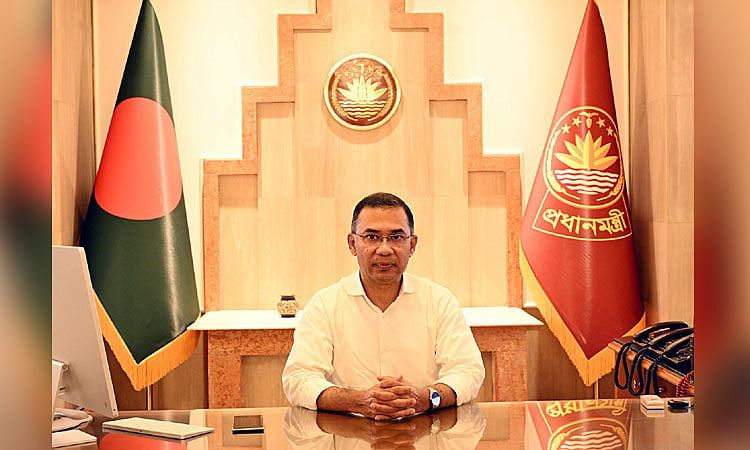
Fresh tensions have emerged in Bangladesh–India relations after ousted prime minister Sheikh Hasina was given an opportunity to speak directly to journalists in Delhi. Against this backdrop, it has become almost certain that Prime Minister Tarique Rahman will not attend the outreach session of the BRICS summit, scheduled to be held in Delhi on 12–13 September.
Several high-level sources of the Bangladesh government told Prothom Alo yesterday, Saturday, that following the recent developments, the possibility of the prime minister attending the BRICS outreach session has effectively vanished.
Indian Prime Minister Narendra Modi had invited Tarique Rahman in his capacity as the current chair of BIMSTEC to attend the session. The invitation was conveyed in a diplomatic letter sent to Bangladesh’s Ministry of Foreign Affairs through the Indian High Commission in Dhaka on 14 July.
BRICS is an alliance of 11 emerging economies. BIMSTEC is a regional organisation for cooperation among countries around the Bay of Bengal. The outreach session of BRICS generally allows leaders of selected non-member countries and regional organisations to participate.
You cannot play the Hasina card and seek friendly relations with Bangladesh; the two are contradictory. I hope the Indian authorities and the Indian government will understand this.Salahuddin Ahmed, home minister
Diplomatic sources in Dhaka and Delhi say the two countries are looking for ways to restore normal relations so that the recent tensions do not develop into a prolonged crisis. Both sides have continued communicating on how to manage the situation and rebuild mutual trust.
Against this backdrop, the first courtesy call by India’s newly appointed High Commissioner to Bangladesh, Dinesh Trivedi, on Prime Minister Tarique Rahman in Dhaka is being viewed as significant. The meeting is scheduled for tomorrow, Monday. Before that, India’s high commissioner is expected to meet Foreign Minister Khalilur Rahman today, Sunday.
According to diplomatic sources, the meetings may discuss the two sides’ positions on the recent developments and the steps to be taken next.
Diplomatic observers say the possibility of putting Bangladesh–India relations on a new footing after the February election has not gained the expected momentum. Although there had been talk of a new chapter in relations, observers believe there was a lack of political and diplomatic initiatives needed to build mutual trust.
Following the recent tensions, how to overcome these shortcomings and move the relationship forward is now a major challenge for both countries, they say.
According to government sources, Bangladesh formally conveyed its strong stance to India after Sheikh Hasina’s event in Delhi last Wednesday. Dhaka made it clear to New Delhi that the government did not view positively the opportunity given to the ousted prime minister to interact directly with journalists in Delhi.
In a statement the Ministry of Foreign Affairs said that Bangladesh was outraged by New Delhi’s decision to allow fugitive and convicted genocider Sheikh Hasina to speak directly to the media in Delhi. It said she and her henchmen launched venomous vitriol against the State of Bangladesh and her people.
Dhaka, meanwhile, has viewed positively the remarks made by Indian Foreign Ministry spokesperson Randhir Jaiswal at the ministry’s regular briefing on Friday. Responding to a question, Jaiswal said that the Indian government did not endorse anything said at the forum, especially with regard to the duly constituted Government of Bangladesh.
According to members of Bangladesh’s diplomatic community, India’s position indicates that, despite the recent tensions, neither country is interested in allowing relations to deteriorate further. There is still an opportunity to take the relationship forward on the basis of mutual respect, dignity, shared interests and sensitivity towards each other’s concerns.
Home Minister’s warning
Home Minister Salahuddin Ahmed has warned India over the political activities of ousted prime minister Sheikh Hasina, who is currently staying in Delhi.
Speaking at an event at Dhaka University Saturday, the home minister said India would have to rethink its pursuit of friendly relations with Bangladesh if it allows ousted prime minister Sheikh Hasina, who fled the country in the face of the July mass uprising, to engage in political activities from Indian soil.
Speaking as the chief guest at an event marking the anniversary of the July mass uprising, Salahuddin Ahmed said, “You cannot play the Hasina card and seek friendly relations with Bangladesh; the two are contradictory. I hope the Indian authorities and the Indian government will understand this.”
The home minister urged India not to allow Sheikh Hasina to make political statements or support activities against Bangladesh. He said Bangladesh wants to maintain friendly diplomatic relations with neighbouring India based on mutual interdependence and respect for sovereignty.
Meanwhile, Suhasini Haidar, diplomatic editor of India’s influential English-language daily The Hindu, argued in an explainer on X Saturday that the two countries should seek a positive way forward amid the current tensions.
In her view, whether ousted prime minister Sheikh Hasina returns to her own country or goes to a third country is entirely her own decision. However, she believes India needs to look beyond the current tensions and focus on maintaining good relations with Bangladesh.