WHO data
Bangladesh emerges as world’s worst-hit by measles over past 6 months
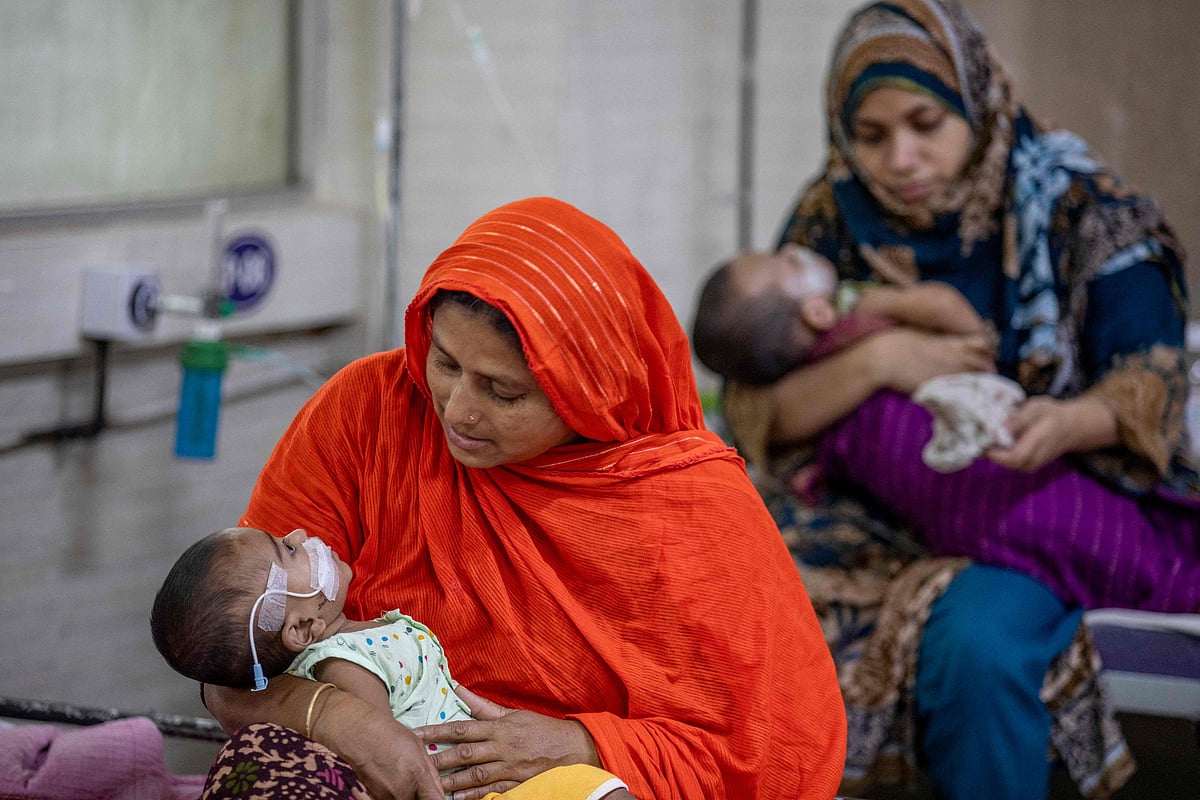
The forgotten disease measles has created concern in the country this year as the number of patients is increasing every day.
According to the data from the World Health Organization (WHO), from December last year to May this year, 42,174 patients with measles or measles symptoms were found in Bangladesh over six months. No other country reported so many patients during this period.
This data is compiled from the regular preliminary data collected by WHO's headquarters in Geneva regarding the global measles and rubella infection situation.
On 14 July, the US Centres for Disease Control and Prevention (CDC) also used WHO's surveillance report prepared for July to present the global measles infection situation.
According to the report, Bangladesh ranks top in terms of measles infection over six months. India, a neighbouring country, is in second place with 26,607 patients with measles symptoms found during this period.
War-torn Yemen is in third place with 14,521 patients. Mexico (12, 495), Pakistan (11, 037), Cameroon (9, 653), Kazakhstan (7, 730), Guatemala (6, 832), Angola (6, 815), and Sudan (5, 766) are among the top ten countries.
WHO reported that 186,000 measles or measles symptoms patients were found across 165 countries in these six months. Statistics show that the biggest measles crisis is now occurring in South Asia, the Middle East, and some African countries.
In June, India topped the WHO's surveillance report for measles infection. From November 2025 to April last year, 23,361 patients were found in India. During that time, Bangladesh was second with 14,704 patients. The July report indicated a rapid increase in the number of patients in Bangladesh.
A study conducted on patients admitted to Bangladesh Shishu Hospital and Institute with measles found that 80 per cent of the children were not vaccinated. Other investigations revealed that 52 per cent of children who died from measles were under 9 months old.
A sudden measles outbreak was observed among children at the beginning of the year. The number of patients began to increase quickly soon after.
However, the health directorate started disclosing measles infection data from 15 March. According to that data, from 15 March to last Tuesday, 119, 448 suspected patients of measles were found in the country, and 14, 708 cases were confirmed. During this time, 702 deaths occurred due to measles symptoms. Additionally, 95 children who tested positive for measles died. In total, 797 children died due to measles and its symptoms during this period.
WHO data shows that in March, the number of patients in Bangladesh suddenly reached 5,000. In the following month, April, it exceeded 20,000. In May, 15,000 patients were found.
According to WHO's preliminary data on measles, public health expert physician Mushtuq Husain believes that the final count will not differ much. He told Prothom Alo that it's assumed that Bangladesh will top the list of measles infections this year. Not only in terms of infections, but measles deaths in Bangladesh may also be higher than any other country.
Even though Bangladesh topped the measles infection list this year, the picture was completely different in the previous years. In 2025, 132 patients were identified; in 2024, 247; in 2023, 282; and in 2022, 311.
Shortage in immunisation, increase in infections:
Bangladesh was once globally recognised for its success in controlling infectious diseases through vaccination. Due to regular immunisation and national campaigns, major outbreaks of diseases like measles were avoided. Experts identify the shortage of vaccinations in recent years as the main reason for the current crisis.
Herd immunity does not develop in one day, nor does it break in one day.Professor Mahmudur Rahman, former director of the IEDCR
WHO reported that the 2006 national measles vaccination programme targeted vaccinating 34. 2 million children aged 9 months to 10 years. The target was fully achieved at 100 per cent.
In the follow-up campaign of 2010, the target was to vaccinate 18.1 million children aged 9 months to 5 years. The coverage that year was also 100 per cent. The countrywide measles-rubella campaign in 2014 targeted vaccinating 52.7 million children aged 9 months to 15 years, exceeding 100 per cent coverage.
No special campaign occurred after 2020-21. Meanwhile, regular immunisation coverage started to decline, dropping to 59 per cent by 2025. A shortage of vaccines was also observed in various parts of the country.
WHO's July report shows that most of the infected were children in Bangladesh this year. Over 4,000 of the approximately 5,000 children affected by measles last year and under one year of age did not receive even one of the two doses of measles vaccine.
Among the 4,000 patients aged 1 to 4 years, 1,500 did not receive any dose, and about 500 received one dose. Among the 1,000 children aged 5 to 9 years, half did not receive any doses of the vaccine.
Mushtuq Husain said, "We have neglected providing vaccines, despite Bangladesh having a tradition of vaccination."
Since coming to power, the current government has spoken more than acted. The most significant point is the number of deaths despite mass vaccination, which is possibly the highest in Bangladesh.Public health expert Mushtuq Husain
A study conducted on patients admitted to Bangladesh Shishu Hospital and Institute with measles found that 80 per cent of the children were not vaccinated. Other investigations revealed that 52 per cent of children who died from measles were under 9 months old.
In an interview with Prothom Alo on 5 May, UNICEF's Acting Country Representative in Bangladesh, Stanley Gwavuya, stated that UNICEF repeatedly expressed concerns in 2025 when the then interim government decided to change the traditional method of vaccine procurement. They feared it would cause long delays in vaccine supply and result in an outbreak of the disease.
Criticism now suggests that even though UNICEF sent letters warning them about the potential vaccine crisis and disease outbreak, the interim government at the time didn't pay attention.
Herd immunity at risk:
Measles is one of the most contagious diseases in the world. Experts say an infected person can infect 12 to 18 others. Therefore, WHO states that at least 95 per cent of children need to be covered with two doses of the vaccine to break the chain of infection, known as herd immunity. In such a situation, even if a small number doesn't receive the vaccine in an area, the disease doesn't spread easily.
Professor Mahmudur Rahman, former director of the Institute of Epidemiology, Disease Control and Research (IEDCR), told Prothom Alo that herd immunity does not develop in one day, nor does it break in one day.
However, if the necessary coverage isn't maintained for two consecutive years, it gradually creates an immunity gap. The result is that there will remain a risk of major measles outbreaks in the future.
The international organisations believe that this large outbreak in Bangladesh is mainly due to this immunity gap.
After this outbreak, the current BNP government started a special campaign in April to vaccinate children aged 6 months to 5 years against measles, but 4. 6 million children still missed the measles vaccine. The calculation was based on vaccinating 18,015,064 children of this age group, but in June, the same age group was covered in the vitamin ''A'' campaign reaching 22. 6 million children.
After this disclosure, public health expert Tajul Islam A Bari told Prothom Alo that such a volume of children being left out is very alarming. They are not only at risk, but they put others at risk as well.
Public health expert Mushtuq Husain said that since coming to power, the current government has spoken more than acted. The most significant point is the number of deaths despite mass vaccination, which is possibly the highest in Bangladesh. WHO, UNICEF, and other partner organisations state that unless children who haven't been covered are quickly found and vaccinated, the risk won't be fully eliminated.