Opinion
Is BNP prepared for a new Bangladesh?
BNP has entered its 47th year. The party that has struggled the most in Bangladesh’s politics now stands at a new turning point. After 15 years of relentless struggle in overthrowing Sheikh Hasina’s authoritarian and mafia-like regime, the party and its leaders and activists have at last found some breathing space. If it wins the upcoming election, the party will once again have the opportunity to move the country forward in anew.
Whoever comes to power will have to take on the challenges of the Fourth Industrial Revolution (an opportunity we have so far utterly failed to seize), the new era of artificial intelligence, and the responsibility to save the country’s environment. Recent public opinion polls indicate people still believe it is BNP that will come to power.
Founded in 1978, this party gave us Bangladeshi nationalism. Today, we can proudly declare that we are pro-Bangladesh people. After the July uprising, only parties that believe in Bangladeshi nationalism remain in our country, a legacy that began with BNP. After the 1991 elections, it was BNP that brought about a complete 180-degree change by returning the nation to parliamentary democracy. In fact, BNP has so far been the force behind the biggest changes and reforms in Bangladesh’s democratic progress.
It was BNP that brought back multi-party democracy after BKSAL. Then it introduced the caretaker government system. Many new reforms came through BNP. For example, the introduction of the VAT system which multiplied Bangladesh’s revenue overnight.
When public universities could no longer meet the growing demand for higher education, permission was granted for private universities in 1994. The Food for Education programme and stipends for girls at the secondary level transformed the country’s education system. Despite having the option of appointing its own mayors, the party passed a law in 1994 to elect mayors through elections. Had the 2004 SAFTA agreement been implemented, the entire SAARC region would look very different today. Even the women’s football movement that is so widely discussed began during the BNP’s tenure.
The corruption allegations against Tarique Rahman are political in nature. Neither the caretaker government nor Sheikh Hasina’s regime could legally prove any of those allegations.
Bangladesh is still searching for another Ziaur Rahman in its politics, the only army officer of the country who announced independence knowing it could be a death warrant for himself, who was wounded in the war, and who was the only living recipient of the highest gallantry award across both nations.
Through canal excavation and the introduction of modern agricultural practices, he reduced the country’s imports by two-thirds. The idea of population control also came from him, though today that effort has severely faltered. He was the one who transformed the economy through the garment sector. He was also the visionary behind SAARC. Sheikh Hasina’s fascist regime spun many tales to malign Zia, but they could never question his integrity.
After Ziaur Rahman’s death, Begum Khaleda Zia who was a housewife at the time, took charge. Today she has become a symbol of unity for Bangladesh. There is much for the people to learn from her uncompromising and resilient spirit. The central goal of her administration was to make the country self-reliant in education and the economy.
The huge development budgets that the Awami League enjoyed later were actually the result of NBR reforms in 2004. At that time, Bangladesh’s rank in the Ease of Doing Business Index was 65, a position that now seems like a dream. The value of the taka was also nearly equal to the Indian rupee then.
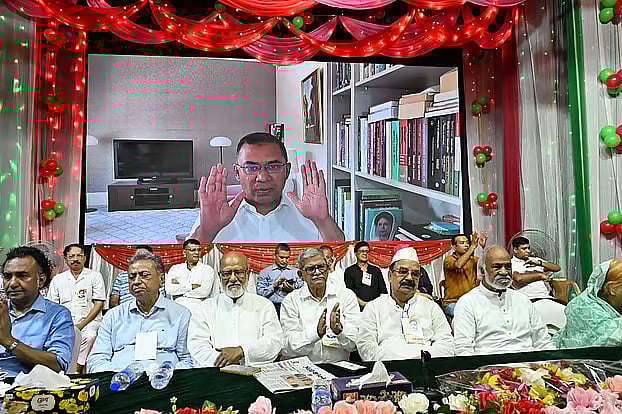
After Khaleda Zia's health deteriorated, the party is now under the leadership of Tarique Rahman. His greatest achievement has been keeping the party united despite such relentless repression, and maintaining it as a liberal democratic party. Through the 31-point declaration, it was essentially BNP that first announced the need for reform in the country.
If one were to list the BNP’s achievements as a party, it would fill volumes. But does that mean there is no criticism? Of course there is. No political party in Bangladesh can be above criticism. Examples include the Magura by-election, the 2008 decision to extend judges’ retirement age, or appointing Jamaat leaders as ministers.
The corruption allegations against Tarique Rahman are political in nature. Neither the caretaker government nor Sheikh Hasina’s regime could legally prove any of those allegations. If they cannot be proven, then Tarique Rahman has the right to seek compensation in court. After all, very few politicians in this country have endured the kind of physical torture he has.
At present, there are many questions about Tarique Rahman’s return to Bangladesh. Some raise concerns about security, but can political leaders afford to be afraid, especially one who is expected to lead the country? His father used to walk freely among the people, at a time when the security situation was even worse.
One of the two biggest problems facing the BNP today is its unruly grassroots. In many constituencies there are more than two aspirants for nomination. People suffer from these internal conflicts. The party has expelled more than three thousand members, yet the problem persists. Many believe this can only be resolved if Tarique Rahman returns and assumes direct responsibility. But is discipline not also the responsibility of the government? Out of those three thousand expelled, we could not determine how many were actually arrested.
BNP must engage with the people as closely as possible. A political party, by definition, belongs to the people, so there must be a help center with email access so that everyone can communicate
The second problem is the reckless remarks of some senior leaders. With age, many seem to be rather careless about what they say. But they must understand how a single careless statement can stymie BNP’s momentum, something that those who conduct opinion polls can easily detect. The young generation is on its toes, always alert to catch everything. There is no escaping. Hopefully, the suspension of Fazlur Rahman will serve as a warning to many.
Another potential pitfall is overconfidence. This leads some to act as if they have the whole world in their hands, while others risk alienating voters.
These problems could have been partly addressed by BNP itself. If they had maintained a registered membership list published on their website, outsiders could not have extorted money in the party’s name. Moreover, with no party council held for a long time, the culture of accountability to the people among leaders has eroded.
During Ziaur Rahman’s time, inner-party democracy protected the party from many dangers. BNP must bring in young leadership and establish performance-based evaluation. Just as a strong panel was formed in the DUCSU elections, similar candidates must be fielded nationwide.
BNP failed to transfer power smoothly in both 1996 and 2006. Not only that, but the mistakes of 2006 forced the party’s leaders, activists, and the entire country to pay an excessive and ultimate price.
If Tarique Rahman, as the possible future Prime Minister, can govern the country democratically for five years and then hand over power in an orderly manner to a caretaker government before reentering the electoral campaign, it would be a unique success for him and his government.
There is another point to be made. Time and again, BNP has failed to judge people correctly. It appointed ambitious men like Ershad, Nasim and Moeen as army chiefs. It also gave opportunities to General Masududdin, General Matin, and many others. Now is the time to be cautious in judging people. Since Sheikh Hasina fled, many opportunists have been hovering around the party. If BNP fails to recognise these people, not only the party but the country will suffer.
BNP must engage with the people as closely as possible. A political party, by definition, belongs to the people, so there must be a help center with email access so that everyone can communicate. Arrangements should be made accordingly. If we can email the President of the United States, why shouldn’t we be able to do the same in our own country? In the upcoming schedule, we want to see a clear manifesto in our own language. The culture of keeping promises is now the expectation of all Bangladeshis.
Bangladesh’s well-being is somehow intertwined with BNP’s. Therefore, for our good, BNP must do well and remain strong. Notice that BNP’s list of successes contains no development projects, rather, all of them are reform-oriented. This time, too, BNP has accepted almost all major reforms, fully or partially, amounting to 94 per cent of the proposals.
There is only one major disagreement—on a proportional upper house. Who knows, perhaps the proportional upper house will come about through BNP, the only proven reformist party so far—but not under anyone’s pressure. With reforms to the party constitution and the restoration of democracy, we may see many new developments before the 48th anniversary of BNP's founding.
* Subail Bin Alam is an engineer and columnist; Ehteshamul Haque is a an attorney in the US.
* The views expresses here are the authors' own.