Opinion
Dhaka–Delhi ties positive, ‘so far so good’
After the political change on 5 August 2024, India made it clear to Bangladesh’s interim government that discussions on normalising bilateral relations would begin only with an elected government in Dhaka. Following the festive election on 12 February, that process has begun. Judging by the state of relations over the past year and a half, the official mindset in both countries now appears positive.
Neither Dhaka nor New Delhi has made any careless remarks, and no political comment has emerged that could cast doubt on rebuilding ties. On the contrary, statements, or the deliberate absence of them, from both governments and political leaders suggest that the two sides are keen to look ahead with a constructive outlook. In short, the post-election phase may be described as: “so far, so good.”
India’s conduct over the past year and a half has made several points clear. First, New Delhi is unlikely to accept Bangladesh’s demand for the extradition of former prime minister Sheikh Hasina.
However, that does not mean bilateral relations will remain trapped in the Hasina question or become entirely centred on her. India appears to be signalling that the Hasina chapter belongs to the past for now and that the relationship should be viewed in the light of the future.
Second, India’s recent behaviour suggests that the relationship is historical and rooted in people-to-people ties rather than centred on any particular government or political party.
Implicitly, New Delhi seems to be acknowledging that placing “all eggs in one basket” in the past may have been a mistake. Efforts to correct that began during the controversial election in 2024 and have gathered pace since the uprising.
India’s willingness to engage with Bangladesh’s new government was further demonstrated on the opening day of its parliamentary budget session, when both houses of the Indian parliament adopted condolence motions in memory of Khaleda Zia.
Third, India has also indicated that it is essential to have friendly relations between the two nations due to geopolitical realities and geographic proximity between the two countries. A spirit of good neighbourliness, peaceful coexistence and active cooperation is necessary for both sides. Mutual goodwill is required for mutual interests.
If security is India’s primary condition as it seeks to emerge as a leading economic power in the Global South, Bangladesh’s urgent priority is to restore economic momentum. Growth has slowed from 6.1 per cent in 2023 to about 2.5 percentage points lower, while around 2.1 million people have lost their jobs. Moving forward together is therefore essential for both countries. Just as India needs certainty regarding security in its north-eastern region, Bangladesh must pursue economic recovery while maintaining stability.
Signs of a change in attitude are visible on both sides. During the tenure of the interim administration, India frequently expressed concern over “minority persecution” in Bangladesh. However, after the formation of a government by the Bangladesh Nationalist Party (BNP), the issue has not been emphasised in the same way.
Similarly, although India stressed the importance of a free, fair, peaceful, democratic and “inclusive” election before 12 February, it did not raise its voice over the “lack of inclusiveness” once the voting process was over.
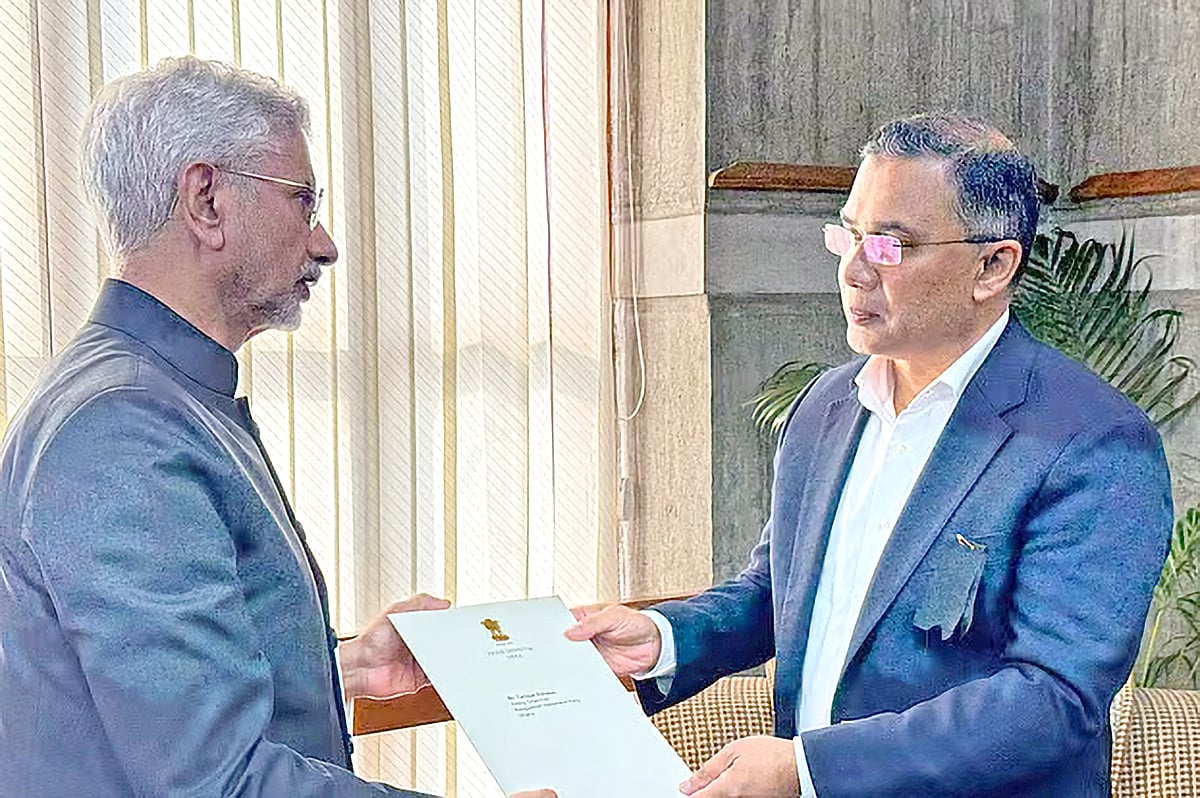
Another indication was India’s decision to send external affairs minister S Jaishankar to Dhaka following the death of former prime minister and BNP chairperson Khaleda Zia.
Jaishankar carried a letter from Prime Minister Narendra Modi to Tarique Rahman, expressing deep condolences and writing that he hoped Rahman’s leadership would help usher in a new phase of prosperity in the historic partnership between India and Bangladesh.
Another signal came when Om Birla, Speaker of India’s Lok Sabha, travelled to Dhaka to attend Tarique Rahman’s swearing-in as prime minister.
For about a year and a half, obtaining Indian visas has been difficult. Under the changed circumstances, India is now reconsidering the possibility of normalising the visa process. Both sides appear aware that relations should improve gradually, which is why cautious steps are being taken.
India’s willingness to engage with Bangladesh’s new government was further demonstrated on the opening day of its parliamentary budget session, when both houses of the Indian parliament adopted condolence motions in memory of Khaleda Zia.
Relations, however, cannot be improved by one side alone. The BNP has also signalled a pragmatic approach. During his 17 years in London, Tarique Rahman observed Western democracies closely, an experience that appears to have shaped a more measured and pragmatic political outlook.
While some advisers of the interim government, leaders of the anti-discrimination student movement and the leaders of the National Citizen Party (NCP) voiced strong anti-India rhetoric, Tarique Rahman and other senior BNP leaders avoided that path.
Rather, in several interviews he has emphasised that Bangladesh will not allow its territory to become a haven for terrorists. He has also spoken out against religious extremism and repeatedly stressed the need to build a new Bangladesh by learning from past mistakes, where all citizens share a common identity as “Bangladeshis”.
Following the election, Prime Minister Narendra Modi wasted little time in congratulating the new Bangladeshi Prime Minister, Tarique Rahman, sending both a message and making a phone call, steps that suggest India viewed the election outcome with a degree of comfort.
Positive developments have continued on both sides. Soon after the new government took office, Bangladesh’s newly appointed director general of the Directorate General of Forces Intelligence (DGFI), Major General Mohammad Kaiser Rashid Chowdhury, visited India.
During the three-day trip, he met Parag Jain, head of India’s external intelligence agency, Research and Analysis Wing (RAW), and Lieutenant General RS Raman, director general of military intelligence. Earlier, Bangladesh’s then national security adviser Khalilur Rahman, now serving as foreign minister in the new government, had visited Delhi in November and met India’s national security adviser Ajit Doval.
Shortly after the DGFI chief’s visit, news emerged of the arrest of suspects in the killing of Bangladeshi student leader Osman Hadi. When asked about the possible extradition of the accused, India’s foreign ministry spokesperson Randhir Jaiswal said it would not be appropriate to comment beyond the statement issued by the West Bengal police, an answer many observers saw as diplomatically significant.
Another recent signal of positive intent has emerged in the energy sector. Ongoing conflict in West Asia has intensified fuel supply pressures, and Bangladesh has sought additional diesel through a pipeline from India’s Numaligarh Refinery.
India has said the request is under consideration. Bangladesh could have turned elsewhere, and India could have refused—but neither happened. When Jaishankar returned from Dhaka earlier, he referred to such examples of “mutual dependence” while highlighting the spirit of good neighbourliness.
For Bangladeshi citizens, access to Indian visas remains a crucial and sensitive issue. The economies of India’s West Bengal and Tripura states also depend significantly on Bangladeshi tourists.
For about a year and a half, obtaining Indian visas has been difficult. Under the changed circumstances, India is now reconsidering the possibility of normalising the visa process. Both sides appear aware that relations should improve gradually, which is why cautious steps are being taken.
For the moment, the signs remain encouraging. Whether both countries can sustain diplomatic restraint and strategic realism will depend on the foresight and judgement of their political leadership. For now, it is fair to say: “so far, so good.”
* Soumya Bandyopadhyay is the New Delhi correspondent of Prothom Alo.
* The opinions expressed in this article are the author’s own.