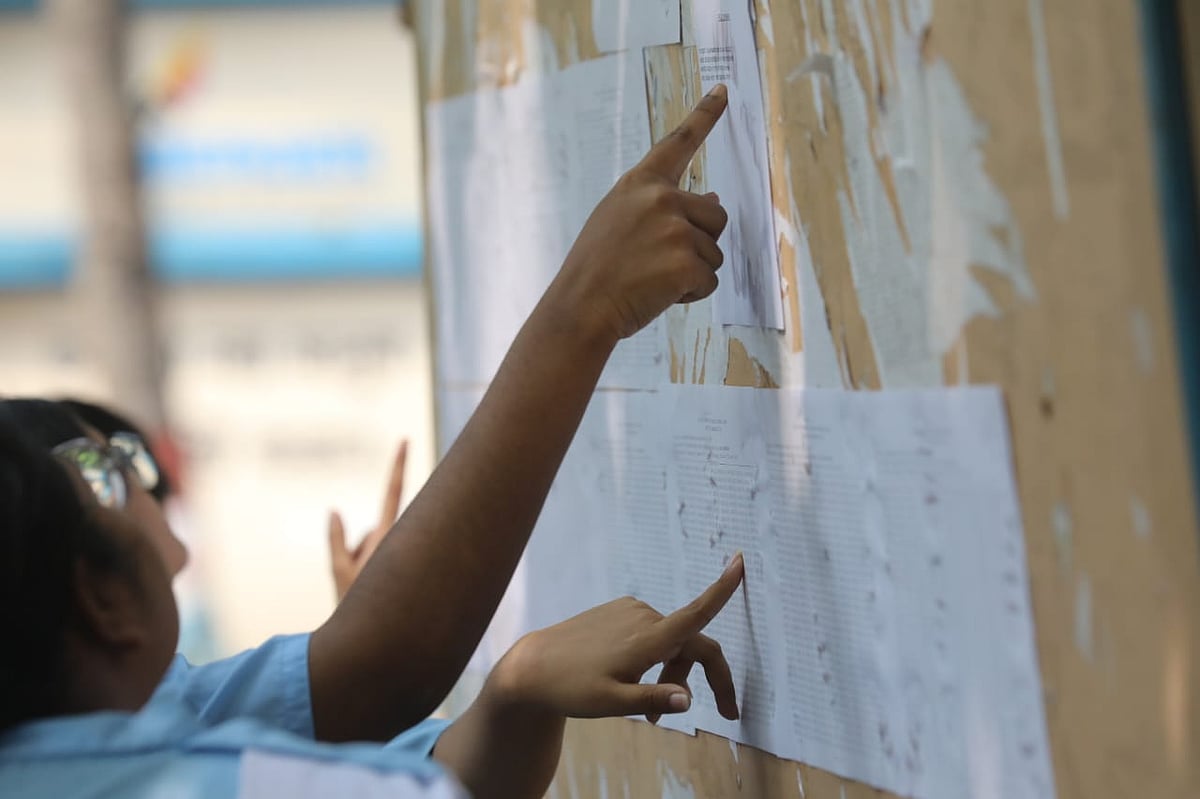
HSC result: Lowest pass rate in 21 years, fault in edu system or something else?
This year’s Higher Secondary Certificate (HSC) results have recorded the lowest pass rate in two decades. In 2005, the pass rate was 59.16 per cent. Since then, it had generally increased or fluctuated slightly, until this year when the results took a sharp downturn. For the first time in 21 years, the HSC pass rate has plummeted this year.
Under the nine general education boards, this year’s average pass rate stands at 57.12 per cent, nearly 19 percentage points lower than last year. In other words, around 43 per cent of students failed to pass this year. The number of students achieving GPA-5 has also dropped dramatically. Last year, 131,376 students obtained GPA-5, compared to 78,521 the year before. This year, the number has fallen to 63,219.
The HSC results were published today, Thursday. A total of 1,047,242 students sat for the exams under nine general education boards, of whom 598,166 passed. Results for the equivalent Alim (Madrasa), HSC Vocational, BM, and Diploma in Commerce examinations were also released today.
Two decades of fluctuating results
According to the Bangladesh Bureau of Educational Information and Statistics (BANBEIS), the HSC pass rate in 2005 was just over 59 per cent. It rose to nearly 64 per cent in 2006, over 64 per cent in 2007, and around 75 per cent in 2008. However, in 2009, it dropped again to 70.43 per cent.
In the following years, the pass rate fluctuated between 70 and 80 per cent, except for three years- 2015, 2017, and 2018- when it fell below 70 per cent.
In 2020, no formal exams were held due to the COVID-19 pandemic and all students were promoted through a special evaluation process. In 2021 and 2022, examinations were held under exceptional conditions, with pass rates exceeding 84 and 95 per cent, respectively. However, the rate dropped below 80 per cent in 2023 and has now plunged to 57 per cent, the lowest in 21 years.
An analysis of this year’s results reveals that a significant number of students failed in English and in Information and Communication Technology (ICT), which affected the overall outcome heavily.
Last year in 2024, several HSC exams were cancelled midway in the face of student protests. In that situation, the answer scripts of the exams already held were evaluated, while the results of the cancelled exams were determined based on the students’ SSC results through “subject mapping”.
Many believed this would inflate the overall pass rate. However, that did not happen instead, the average pass rate under the nine general boards fell compared to 2023, although the number of GPA-5 achievers rose.
Other indicators also declining
This year the number of institutions with a 100 per cent pass rate has also dropped significantly. Last year, a total of 1,388 institutions achieved 100 per cent pass rates, but this year that number has dropped to 345 only. On the other hand, the number of institutions with zero pass rates rose sharply to 202, compared to just 65 last year.
‘Definitely there are flaws’
At a press briefing following the publication of the results, Professor Khondoker Ehsanul Kabir, chairman of the Dhaka Education Board and president of the Inter-Education Board Coordination Committee said, “We didn’t give examiners any directive or guideline to award marks leniently or to engage in overmarking to raise pass rates. There’s no question of doing so.”
“During the last SSC (Secondary School Certificate) exams, the education ministry instructed everyone to strictly follow the rules. The boards reminded examiners about proper evaluation guidelines and even extended the marking deadline to ensure fair assessment,” he added.
When asked whether the massive difference between results in rural and urban areas and the fact that nearly half of all students failed indicate a deeper problem in the country’s education system, Professor Ehsanul Kabir admitted, “This situation is far from desirable. It’s like standing before a mirror and we can clearly see there are flaws, undoubtedly. We must identify and fix them. That responsibility lies with the schools, the boards, and everyone involved.”
‘We have unknowingly concealed the real learning crisis’
At another press briefing, the education adviser CR Abrar said in a written statement, “This year’s SSC and HSC results have surprised many. The pass rate and GPA-5 figures are lower than last year’s, leading to the question, why? The answer is not complex but rather uncomfortable. The learning crisis in Bangladesh begins very early, at the primary level and the gap widens year after year.”
“However, we have long avoided facing this reality. We have built a culture where numbers became the only truth, the pass rate was seen as success, and the number of GPA-5s as a measure of satisfaction. In our attempt to make results look ‘good’, we have unknowingly concealed the real learning crisis. Today, I call for a change in that culture,” the adviser added.