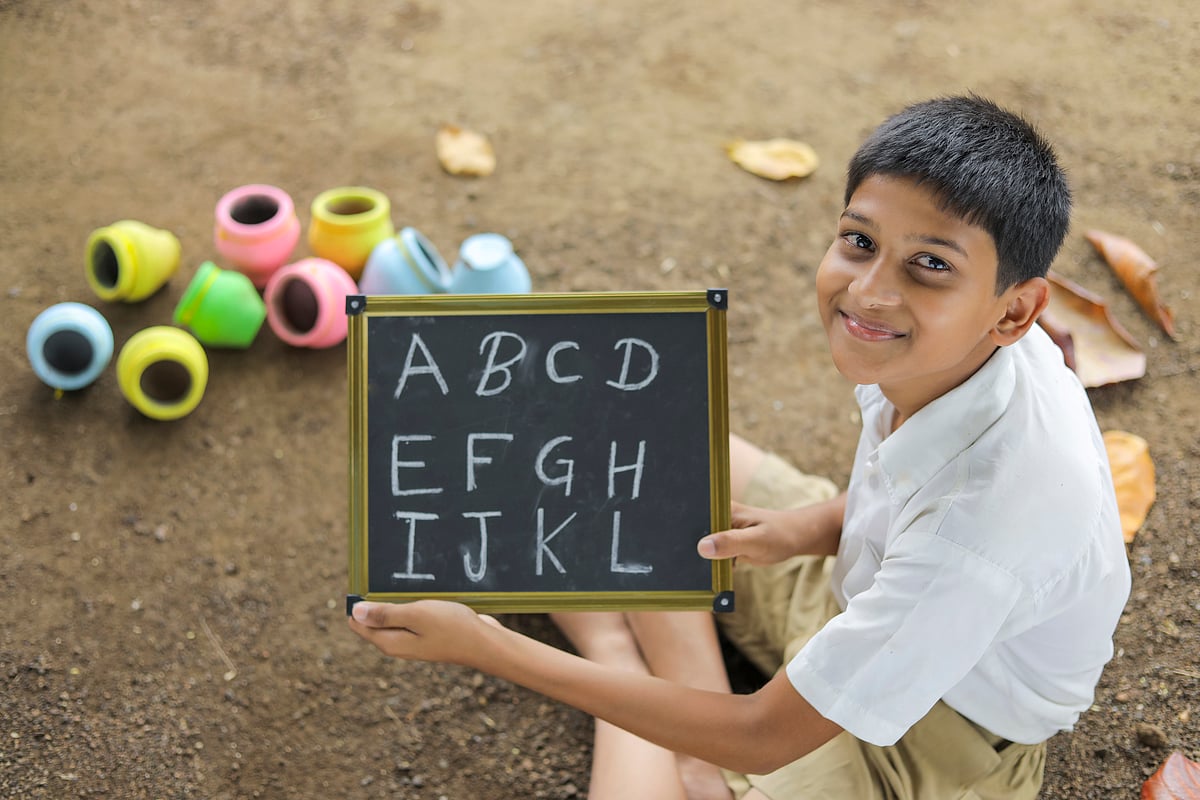
The idea that studying in English-medium schools means being disconnected from roots is still prevalent in society, but the reality is quite different today. English-medium schools are integrating modern education with national heritage in the process of developing global citizens. Through proper instruction in language, culture, and ethics, students are preserving their identity while preparing for the global stage.
A positive blend of roots and education—
Although there are concerns about the practice of Bangla in English-medium schools, the reality is quite encouraging. Abdullah Sabik is a playgroup student at Oxford International School in Dhanmondi, Dhaka. His mother, Sayma Nasim, told Prothom Alo that alongside regular Bangla language practice, her child’s school also runs various activities to develop students’ interest in national history.
The mother said English-medium schools are giving importance to Bangla within the international curriculum, while also giving special attention to celebrating national days. Students’ active participation in events such as Ekushey February (International Mother Language Day) and Pohela Boishakh (first day of the new Bangla year) reflects their deep interest in national values.
By connecting textbook history with real-life practices, students are gaining global educational opportunities while also becoming aware of their own national culture.
In an increasingly competitive future world, skills beyond academic results are equally important for survival. English-medium schools have adopted co-curricular activities as a key part of personality development. Debate competitions, sports, and various social clubs are playing an effective role in building confidence and leadership qualities in children.
These activities help students move beyond rote learning and prepare them to face real-world challenges. According to stakeholders, involvement in social clubs also helps students understand their responsibilities towards society through social service activities.
One of the key purposes of school life is character building. Many international educational institutions now place strong emphasis on student behaviour. In addition to academic excellence, how empathetic a student is has become an important measure of modern education. Regular moral education in classrooms teaches children to respect others.
According to parents, these lessons in empathy and honesty help shape children into humane individuals over the long term. Alongside good academic results, becoming a good human being is now seen as a positive aspect of the education system.
New horizons in psychology and mental development—
Experts have highlighted the importance of family and social environment in a child’s development alongside English-medium education. On this issue, psychiatrist Professor Mekhala Sarkar told Prothom Alo that disconnection from the Bangla language and local culture can occur for various reasons. In particular, lack of reading habits or reluctance in language practice outside the classroom is greatly influenced by the family environment.
Mekhla Sarkar said, “In many cases, parents themselves are not sufficiently aware of practising their own culture. However, if they remain conscious, it is possible to maintain national values alongside world-class education.”
According to her, the stronger a child’s roots are, the higher their chances of success even when going abroad. For, a strong sense of identity makes it easier to adapt to any environment.
Stakeholders believe that alongside the medium of education, a child’s development is also strongly shaped by the environment they grow in. The collaborative atmosphere in English-medium schools today is highly supportive of children’s mental development. In particular, opportunities for leadership practice and social interaction play a vital role in building their emotional strength and confidence.
A child who is exposed to diverse cultures from an early age and learns empathy is more likely to succeed in both professional and personal life. This psychological resilience makes them confident in dealing with complex future situations.
In this era of globalisation, English-medium schools are no longer just centres of language learning. This integration of national culture with global standards is making students more acceptable in employment and social life. According to stakeholders, this combination of ethics and skills in modern teaching methods is considered a key to building the skilled workforce of the future.