Why the government is not cracking down on Awami League sabotage yet, and its strategy
The government is pursuing a political strategy alongside administrative measures to deal with the ongoing violence and sabotage by the Awami League whose activity is banned.
Meanwhile, the ruling Bangladesh Nationalist Party (BNP) has become politically active on the ground against Awami League sabotage. In Dhaka and various districts, BNP leaders and activists are conducting patrols, protest marches and motorcycle processions.
At the same time, initiatives are underway to increase communication and unity among political parties that supported the mass uprising, in response to the recent violence.
Prime Minister Tarique Rahman and opposition leader Shafiqur Rahman have discussed the matter. Opposition parties have responded positively to calls for unity while maintaining their own political positions.
Alongside the BNP, Jamaat-e-Islami has also announced separate programmes to remain active on the ground.
Multiple responsible sources within the government and the BNP said the government views the ongoing violence by the Awami League as provocation.
Opposition parties have responded positively to calls for unity while maintaining their own political positions. Alongside the BNP, Jamaat-e-Islami has also announced separate programmes to remain active on the ground.
According to the sources, they have intelligence indicating that the Awami League and its president, Sheikh Hasina, want law enforcement agencies to open fire while suppressing sabotage, resulting in bloodshed.
The government’s assessment is that the Awami League wants to create a situation similar to the indiscriminate killings by law enforcement agencies during the July mass uprising, thereby subjecting the BNP government to similar allegations.
However, the government does not want to fall into such provocations.
For this reason, sources close to the government said instructions have so far been issued not to use force or lethal weapons, particularly in the ongoing situation in Gopalganj. They said the activities of the Awami League and the operations of law enforcement agencies are being closely monitored. If the situation deteriorates further, tougher measures will be considered.
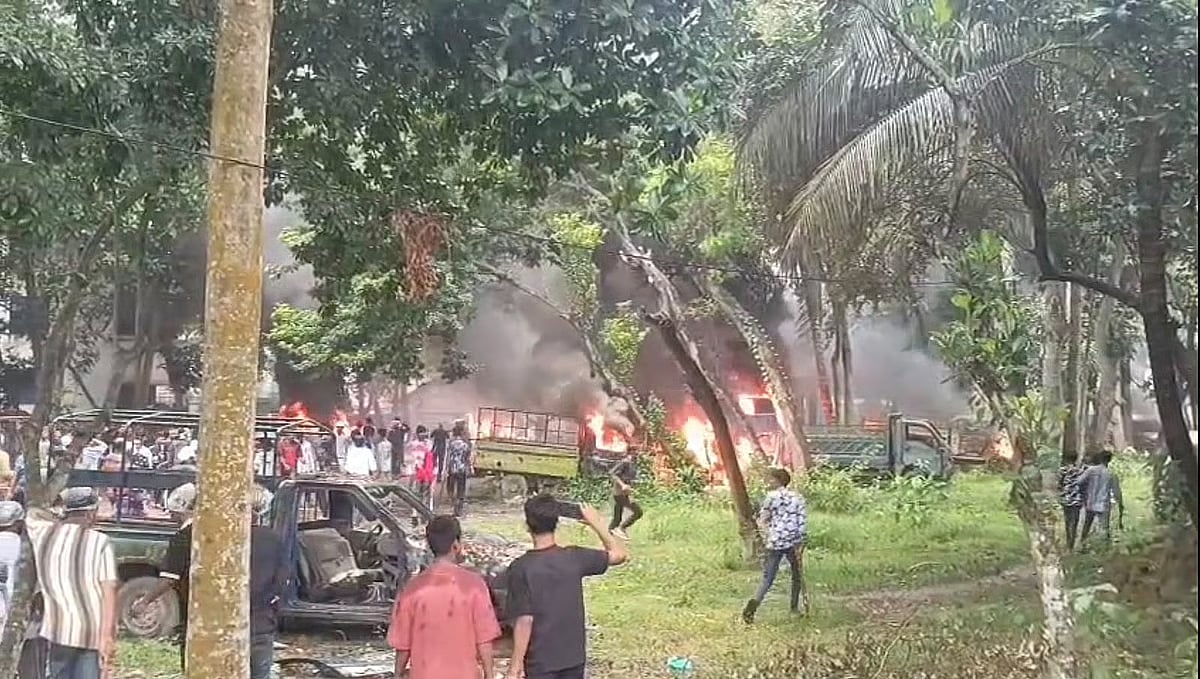
Meanwhile, violence continues in Gopalganj. On Thursday, Muksudpur Police Station was set on fire. The house of Selimuzzaman Molla, BNP MP for Gopalganj-1, was also set on fire.
According to police figures, crude bombs were exploded at 78 locations across the country during the 12 days from 7 to 18 November. Seventy-four vehicles were set on fire. During this period, three police installations and 18 vehicles were subjected to arson and vandalism. In addition, attacks, fires and petrol bombings took place at 72 branch offices of Grameen Bank in various districts. Two BNP leaders were murdered in Natore.
In response to these violent incidents, Prime Minister Tarique Rahman told Parliament last Wednesday that the Awami League was not a political party but a “terrorist group.”
He said the group must be crushed before it can raise its head again. At a public rally in Lalmonirhat on Thursday, the prime minister also said, addressing the Awami League, that the terrorists, arsonists and killers must be given a clear response.
The government does not want to fall into provocations
Responsible sources within the government say they believe the recent activities of the Awami League are aimed not only at deteriorating the law-and-order situation but also have political objectives.
Their assessment is that the Awami League wants the government to resort to heavy-handed force. If law enforcement agencies open fire or casualties occur, this would create an opportunity to use the incidents politically against the government.
During the July movement of 2024, a large number of people were killed by law enforcement agencies firing on the orders of Sheikh Hasina’s government. A trial for crimes against humanity is now underway over those incidents. Sources associated with the government and the BNP assess that the Awami League now wants to put the BNP government in a similar situation.
For this reason, the government’s strategy to deal with Awami League violence is to avoid taking any steps that could lead to widespread bloodshed. According to sources close to the government, the government also wants the people of the country to clearly see how far the Awami League can go in violence and destructive activities. However, if the violence escalates further, subsequent measures could become tougher.
There is also a political dimension to this strategy. During the BNP’s movements in 2014 and 2015, the then Awami League government accused the BNP of “arson terrorism” over crude bomb explosions, petrol bomb attacks and vehicles being set on fire.
Those allegations were also used in political campaigns against the BNP. Now the Awami League itself is accused of similar acts of sabotage. Party leaders and activists are themselves posting videos of attacks and arson incidents from the scenes on social media.
Over the past few days, what measures the government is taking against Awami League sabotage in Gopalganj and other parts of the country has become a topic of discussion.
Asked about this, Home Minister Salahuddin Ahmed told Prothom Alo on Thursday, “Wait and see.”
He later said, “We will deal with fascist behaviour democratically, politically and lawfully. We will not allow anything that harms the lives and property of innocent people. The Awami League has repeatedly revealed its character by ruling the country in an authoritarian manner, establishing one-party BAKSAL, committing enforced disappearances and killings, and engaging in arson terrorism. This is their character.”
Salahuddin Ahmed said, “We will not fall into any of their provocations. The people of the country and the world have seen their activities. The international community is evaluating their activities and will continue to do so.”
We will not fall into any of their provocations. The people of the country and the world have seen their activities. The international community is evaluating their activities and will continue to do so.Salahuddin Ahmed, Home Minister
Preparations to counter them politically as well
A senior government leader said they were closely monitoring both the ongoing incidents and the activities of law enforcement agencies.
The reporter spoke with several BNP leaders at the policymaking level on Thursday. They believe the Awami League has come to be regarded as a dangerous political party incapable of engaging in healthy politics.
Many BNP leaders believe that, following the July mass uprising, the Awami League was expected to acknowledge and repent for its actions during its tenure in power, including enforced disappearances and killings, and apologise to the people. However, they say the party’s leadership has shown no sign of self-criticism or remorse at any level.
Instead, following Sheikh Hasina’s announcement that she would return to the country in December, the party is allegedly trying to create fresh instability through violence and sabotage.
Regarding this, BNP Acting Secretary General Ruhul Kabir Rizvi told Prothom Alo Thursday, “The Awami League is an illegal force, a banned organisation. Those who engage in illegal activities will be brought under the law by law enforcement agencies in accordance with the law. And as a political party, we will remain alert and prepared to confront any illegal force in a democratic environment.”
Sources concerned said the prime minister proposed holding an all-party mass procession involving anti-fascist political parties. Meanwhile, the opposition leader proposed dialogue among political parties.
Initiative to build unity with opposition parties
The recent violence by the Awami League has created challenges not only for the government but also for political parties that supported the mass uprising. In this situation, increasing communication and unity among political parties is gaining importance.
According to several sources concerned, Prime Minister Tarique Rahman and opposition leader Shafiqur Rahman spoke privately during a break for Maghrib prayers at the Parliament session last Wednesday. Afterward, the leader of the House and the opposition leader delivered their concluding speeches at the fourth session of the National Parliament.
Sources concerned said the prime minister proposed holding an all-party mass procession involving anti-fascist political parties. Meanwhile, the opposition leader proposed dialogue among political parties. The government is reportedly taking steps to initiate the process of arranging political dialogue very soon.
Although Jamaat-e-Islami and other opposition parties have responded positively to the prime minister’s call for unity, their positions are conditional.
In his speech, opposition leader Shafiqur Rahman demanded implementation of the July National Charter in accordance with the referendum verdict. He said the sooner it was implemented, the sooner anti-fascist and anti-hegemony unity would be strengthened.
Although Jamaat-e-Islami and other opposition parties have responded positively to the prime minister’s call for unity, their positions are conditional. The 11-party alliance led by Jamaat held a meeting on Thursday to review the latest political situation in the country and determine what should be done.
At a formal briefing afterward, the alliance’s top leader Maulana Mamunul Haque said the government felt the need for unity. However, the foundation of this unity must be the July Charter, the referendum verdict and the implementation of the aspirations of the July Revolution.
Regarding this, Jamaat-e-Islami Central Assistant Secretary General AHM Hamidur Rahman Azad told Prothom Alo, "The main point of the prime minister’s statement is to bring anti-fascist forces together on one platform in the spirit of 2024."
"For that, the government must come forward to implement the aspirations of 2024 and the referendum verdict. The government could have done this from the very beginning. If it had, there would have been no opportunity for the fascists to try to raise their heads as they are doing now," he added.
BNP active on the ground, Jamaat with separate programmes
The BNP and its affiliated organisations have already become politically active on the ground. In protest against Awami League violence and sabotage in Gopalganj and various other places, leaders and activists are holding protest marches, motorcycle processions and guarding various important installations in Dhaka and other districts.
Yesterday morning, BNP leaders and activists were seen in alert positions and protesting in various areas of the capital. Their presence was also seen in the Saidabad–Jatrabari area in the afternoon. Around 1:30 pm, when a cocktail bomb exploded at Jatrabari intersection, BNP leaders and activists carrying sticks were seen heading towards the scene.
A group of leaders and activists were seen sitting on chairs beside the stairs of Uttara North Metro Station. Two of them were carrying hockey sticks. An activist, who did not wish to be named, told the reporter, “Can’t you see how the fascist Awami League terrorists are setting buses and police stations on fire and killing our leaders and activists? We are guarding the metro rail so that the terrorists cannot set it on fire.”
Meanwhile, party sources said that following the prime minister’s instructions, most BNP MPs had gone to their respective constituencies. At a parliamentary party meeting on Wednesday, Prime Minister Tarique Rahman instructed them to go to their areas and remain active on the ground. Many MPs are expected to participate in protest marches in their respective constituencies today, Friday.
BNP MP Shahadat Hossain Salim of Lakshmipur-1 told Prothom Alo, “Following the instructions of the prime minister and the party chairman, I have already reached Ramganj. Our position against the Awami League’s anarchy and disorder is extremely firm.”
Alongside the BNP, Jamaat-e-Islami has also announced a 40-day programme. From 21 November to 31 December, Jamaat will organise rallies, processions, discussion meetings and social activities in Dhaka and across the country. This effectively signals that the party will remain active on the ground throughout December. The National Citizen Party (NCP) will hold protests and protest meetings district by district, both independently and jointly.
As a result, political resistance is also intensifying alongside administrative efforts to tackle the ongoing sabotage. For now, the government is maintaining a cautious stance to prevent the spread of violence, the BNP is becoming active on the ground, and opposition parties are announcing programmes while maintaining their respective political positions.