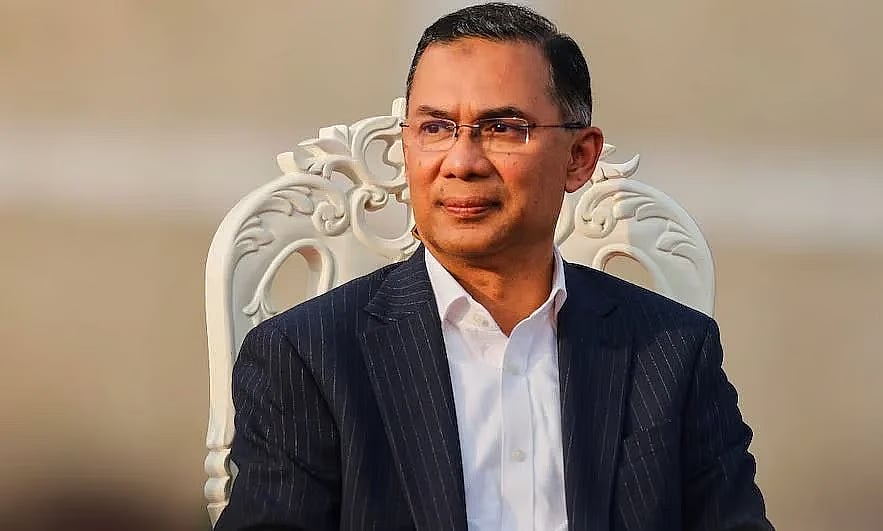
After Ferdousi Ahmed (Misti), Ishraque Hossain has become the second person in two and a half weeks to be ordered to step down, as Prime Minister Tarique Rahman sends a stern message to both the government and the party.
According to assessments by senior figures in the government and the ruling Bangladesh Nationalist Party (BNP), the message is not intended for the two individuals alone, but for ministers, members of parliament (MPs) and party leaders and activists alike.
According to them, no one can be certain of retaining their position if they flaunt their power or embarrass the government and the party by overstepping the bounds of their responsibilities.
Ferdousi Ahmed had to resign as an MP after people close to her were implicated in an attack on the Radda health centre in Mirpur, in the capital, and the demolition of its building. Ishraque, meanwhile, sparked controversy by taking part in an anti-narcotics operation while brandishing a firearm. In one case, questions were raised about the conduct of associates; in the other, the individual himself became the centre of controversy.
On Sunday afternoon, after a Cabinet meeting at the Secretariat, the prime minister summoned Ishraque and instructed him to resign. At a press conference at the National Press Club yesterday, Monday, Ishraque announced that he was stepping down as state minister.
Earlier, following the prime minister’s instructions, Ferdousi Ahmed submitted her resignation to the Parliament Speaker on 1 October. Her parliamentary seat was subsequently declared vacant.
In their assessment, the main purpose of the tough decisions against Ishraque, following the action against Ferdousi Ahmed, was to prevent displays of arrogance in the exercise of power, ensure that people stayed within the limits of their mandate, and prevent individuals’ controversial actions from tarnishing the government and the party.
Following Ishraque’s resignation, this correspondent spoke to several members of the BNP’s Central Executive Committee and the Cabinet, as well as two highly placed sources at the Prime Minister’s Office (PMO). None was willing to comment on the record.
In their assessment, the main purpose of the tough decisions against Ishraque, following the action against Ferdousi Ahmed, was to prevent displays of arrogance in the exercise of power, ensure that people stayed within the limits of their mandate, and prevent individuals’ controversial actions from tarnishing the government and the party.
BNP Standing Committee member and Finance Minister Amir Khasru Mahmud Chowdhury told Prothom Alo that the prime minister was repeatedly trying to convey the message that no one was above the bounds of public order and political propriety.
Pointing out that the prime minister himself was setting an example through a simple lifestyle, humble conduct and adherence to proper etiquette, he said, “Everyone in the party needed to understand this.”
Individual accountability and the party interests
According to relevant government sources, one aim of the action against Ferdousi Ahmed and Ishraque was to contain controversies surrounding the party and the government that had arisen from individuals’ conduct. The prime minister does not want broader interests to be jeopardised by attempts to protect someone on the basis of their political standing or official position.
A Cabinet member, speaking on condition of anonymity, said the prime minister was taking a firm stance to prevent anyone from becoming arrogant by exploiting the opportunities that come with being in power.
According to the member, whether a minister, an MP or a party leader or activist, the prime minister did not want the government and the party to bear the consequences of anyone’s conduct bringing them into disrepute. These decisions also conveyed the message that the party’s wider interests would not be allowed to suffer in order to protect an individual, the member said.
Message to stay within the bounds of responsibility
The question of the limits of official responsibility has come particularly to the fore in Ishraque’s case. Criticism began after a video circulated on Saturday showing him taking part in an anti-narcotics operation in Gandaria, Dhaka, while carrying a firearm.
In a statement, Ishraque claimed that he had raised the weapon to defend himself against a possible attack and had not violated the law.
Government figures, however, said that a state minister’s decision to take part in an operation in this manner, rather than activating the agencies responsible for drug control and the law enforcement authorities, had embarrassed the government. In other words, beyond Ishraque’s own explanation of his actions, the question of how far those actions were compatible with his position and responsibilities also became an important consideration.
A Cabinet member said everyone must do the job assigned to them and that the law must not be violated. According to the member, even if an initiative has good intentions, that does not give anyone licence to exceed the limits of their responsibilities. Those entrusted with running the government must also remain mindful of their own conduct.
Another minister said the prime minister wanted everything to be kept within the rules. He did not approve of people going beyond what was required under the pretext of carrying out their duties.
According to a PMO official, the prime minister had urged everyone to follow the “Sirat al-Mustaqim” (the straight path). Anyone who failed to understand this message or act accordingly would face trouble, the official said.
Ferdousi Ahmed had denied allegations of involvement in the Radda incident. Ishraque, too, offered an explanation in defence of his actions. The prime minister ordered both to step down. Senior sources in the government and the party view his firm stance as a warning to others.