DUCSU incident
Attempt to rewrite history by removing figures from independence movement unacceptable: Professor Tanzimuddin
An attempt has been made, in the name of renovating the Dhaka University Central Students’ Union (DUCSU) museum, to remove important figures and memorabilia associated with Bangladesh’s independence movement and create a new history from a partisan perspective. Such an attempt is at odds with the ethos of Dhaka University. Professor Mohammad Tanzimuddin Khan has sought an explanation as to why this was done.
No photograph depicting Bangabandhu Sheikh Mujibur Rahman’s role in the independence struggle has been displayed in the DUCSU museum. Instead, photographs of Mohammad Ali Jinnah, then governor of Pakistan, and Abdul Malek, a leader of the then Islami Chhatra Sangha, have been put on display.
At the same time, various aspects of the movements between 1947 and 1971, including the 1966 and 1969 movements, the 14 December 1971 killing of intellectuals and the list of Razakars, have also been removed from the DUCSU museum.
Professor Tanzimuddin Khan has questioned the policy under which these changes were made. He has also demanded an explanation of where the memorabilia associated with Bangladesh’s democratic movements and struggle for independence have been kept.
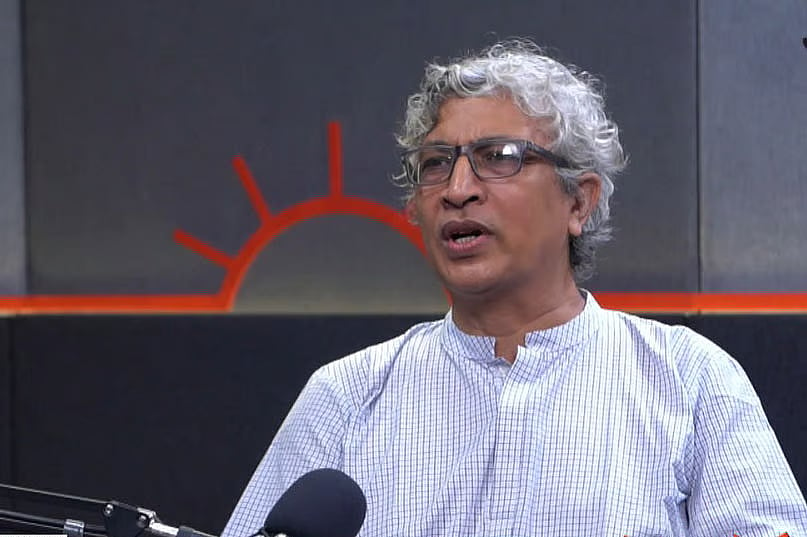
Professor Tanzimuddin Khan, an active member of the University Teachers’ Network, made these remarks while appearing on Prothom Alo’s regular programme “Barta Kokkho” (Newsroom) on Monday night.
The DUCSU museum reopened on Sunday following renovation. Controversy erupted after it emerged that a photograph of Pakistan’s founder Mohammad Ali Jinnah had been put on display in place of a solo photograph of Sheikh Mujibur Rahman.
On Monday afternoon, a student named Abu Tayeb Habildar protested by tearing down three photographs of Jinnah at the DUCSU museum. Later, leaders and activists of the Bangladesh Chhatra Federation put up a photograph showing Ghulam Azam being beaten with shoes at Baitul Mukarram in 1981 in place of Jinnah’s photographs.
Asked about the matter, Professor Mohammad Tanzimuddin Khan said controversies had been emerging since the current DUCSU leadership assumed office. The decision to put up Jinnah’s photograph had created yet another controversy as part of that continuing pattern, he remarked.
The Jatiyatabadi Chhatra Dal (JCD), Bangladesh Chhatra Union and various other student organisations have protested against the display of Jinnah’s photograph at the DUCSU museum. Many students also expressed their anger over the incident in Facebook posts.
Later, a press release issued by Dhaka University said that displaying photographs of Mohammad Ali Jinnah, then governor general of Pakistan, and Abdul Malek, then a leader of the Islami Chhatra Sangha, at the DUCSU museum was conflicting with the history of the Language Movement and Bangladesh’s independence.
Stating that such photographs were in no way acceptable for display at the university museum, it further said, “The university would take strict administrative action against those responsible in accordance with its existing rules and regulations.”
Referring to the university’s statement, Professor Mohammad Tanzimuddin Khan said on Barta Kokkho, “The university’s statement indicates that the administration had not approved these activities. DUCSU is itself a part of the university and is supposed to assist the administration on behalf of the students. It is not DUCSU’s responsibility to challenge the administration or act as an alternative to it.”
He further said that the DUCSU museum was an asset of the university and that ownership did not lie with DUCSU but with the university administration. Decisions on such matters also fell within the authority of the university administration and the Syndicate.
Asked about the matter, Professor Mohammad Tanzimuddin Khan said controversies had been emerging since the current DUCSU leadership assumed office. The decision to put up Jinnah’s photograph had created yet another controversy as part of that continuing pattern, he remarked.
‘Assessing teachers is beyond DUCSU’s jurisdiction’
Professor Mohammad Tanzimuddin Khan also spoke on Barta Kokkho about “DUCSU amid the controversy over teacher evaluations and Jinnah’s photograph”.
He described the introduction of a system for evaluating and rating university teachers at DUCSU’s initiative as beyond its authority and an “attempt to create a parallel administration”.
DUCSU was not an administrative body. If it attempted to carry out administrative functions itself, that would amount to creating a parallel administration.Professor Mohammad Tanzimuddin Khan, International Relations department, Dhaka University
According to Professor Mohammad Tanzimuddin Khan, a system for evaluating teachers is necessary, but it should operate within the university administration’s existing structure. If DUCSU takes on this responsibility, it could create scope for the system to be used for political purposes.
Professor Tanzimuddin Khan said teacher evaluations by students existed in many parts of the world and were generally known as “student feedback”. Such a system was necessary to ensure teachers’ professional development, he said. However, student feedback should be incorporated into the university’s existing policies governing promotion from one academic rank to another.
He pointed out that factors such as the number of years a teacher had worked, the number of publications they had produced or whether they held a PhD or other degrees did not provide a complete picture of how effectively they were performing their professional responsibilities.
“Many teachers may be good researchers but neglect their teaching,” he said. “At the same time, there is no proper system for evaluating those who fulfil their responsibilities in both research and teaching.”
Professor Tanzimuddin Khan said efforts had been under way at Dhaka University since 2022 to introduce a teacher-evaluation system, and that such systems had already been introduced in some departments.
The Institute of Business Administration (IBA) and the Department of International Relations (IR), among others, have such arrangements, he said. Efforts were also being made collectively to introduce such a system in his own department. The university administration had also been active on the issue, although the system had not yet been fully implemented.
Regarding DUCSU’s initiative, the professor said DUCSU had a specific organisational structure and a defined scope of activities. The first question, therefore, was whether evaluating teachers fell within its mandate.
In his view, DUCSU was not an administrative body. If it attempted to carry out administrative functions itself, that would amount to creating a “parallel administration”.
Professor Tanzimuddin Khan said that although DUCSU was an elected institution, it was not politically neutral. Its members had ideological orientations, which could be reflected in their activities. Teachers, too, held differing ideological positions. As a result, there was a risk of bias in evaluations conducted by DUCSU.
The professor also described the possibility of students being able to see teachers’ evaluation scores under the DUCSU initiative, followed by the scores being circulated on social media, as a “violation of privacy”.
This could complicate healthy teacher-student relationships, he said. It could even create a situation in which a teacher no longer felt comfortable entering the classroom.
Asked whether DUCSU elections should be held regularly, Professor Mohammad Tanzimuddin Khan said DUCSU was a platform for producing student leaders and developing future leadership.
“However, if DUCSU cannot bring about a change in the country’s political culture, it could become dangerous for national politics,” he said.